
Casinos That Accept Mastercard in the UK: Debit Cards
 Available in GB
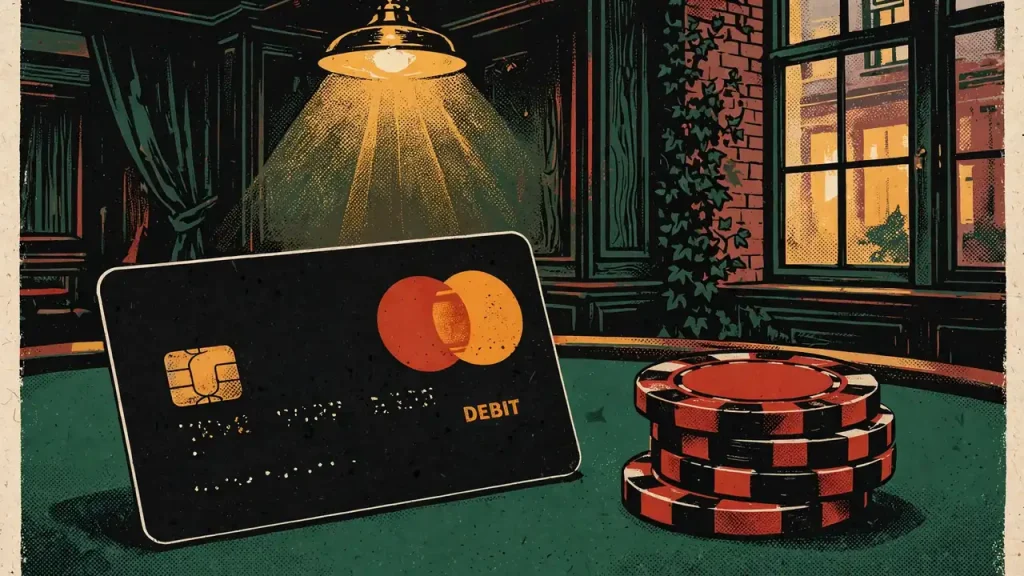
Mastercard branding does not guarantee eligibility: deposits depend on card type, casino rules and issuer approval.
Why Mastercard Acceptance Is Different in the UK
A Mastercard logo in a casino cashier does not tell the whole story. In the United Kingdom, the important distinction is not simply between Mastercard and Visa, but between the type of card behind the logo. A Mastercard debit card and a Mastercard credit card may carry the same network branding while being treated very differently for gambling transactions.
That difference is decisive. UK-licensed remote gambling operators cannot accept credit-card payments for gambling. The restriction also covers credit-card funding routed through a money service business. The rule took effect on 14 April 2020 and remains in force. As a result, a page that advertises Mastercard deposits cannot be read as an invitation to use any Mastercard product.
The permitted route is generally a debit card, subject to the operator, the card issuer and the current cashier configuration. UK casinos commonly list Visa and Mastercard debit cards among their payment methods. The word “debit” does the real work in that sentence.
Casino Payments: UK Deposit and Withdrawal Options
The logo is not the eligibility check
I have seen payment pages described as “Mastercard accepted” where the practical position was narrower. The network was supported, but a particular card product could still be declined. A prepaid product, a business card, a card issued outside the relevant market or a card with gambling transactions restricted by its issuer may not behave like an ordinary UK debit card.
That is why the cashier matters more than a general payment-method page. A specialist review may list Visa and Mastercard as available options, but such a listing cannot establish that every Mastercard product is currently eligible. The payment screen is where the operator applies its live settings and where the available route is presented for the account being used.
This also explains why a list of “all Mastercard casinos” is difficult to treat as permanent. Payment availability can change without the Mastercard brand itself changing. An operator may remove a route, limit it to deposits, alter the countries or currencies it supports, or reject a transaction because the issuer has not approved it. A site that appeared suitable when a review was prepared may therefore show a different cashier later.
The short version: the logo identifies the network, not the card’s gambling eligibility.
Why credit and debit cards are handled differently
Credit-card gambling is prohibited for UK-licensed casinos because the transaction uses borrowed funds. The same restriction applies even when the credit facility is less obvious in the payment chain. A wallet or money service must not be used to route credit-card funds into gambling where the arrangement would bypass the prohibition.
Casinos That Accept MiFinity in the UK
A debit card draws from an existing bank balance rather than a credit facility. That is why Mastercard debit cards remain a recognised payment category at UK casinos, while Mastercard credit cards cannot be used for gambling deposits with UKGC-licensed remote gambling operators. The distinction is legal and operational, not cosmetic.
This does not mean that every debit card will work. The casino still needs to support the card route, the issuer must permit the transaction, and the account and payment details need to align. A failed deposit is not proof that Mastercard has disappeared from the UK market. It may indicate that the card product, issuer, account, or cashier does not match the route currently available.
Age and account controls form part of the same framework. A remote gambling operator must verify a customer’s age before allowing a deposit. UKGC-licensed operators must also prompt new customers to set a financial limit before the first deposit and provide account-level controls for changing those limits. Mastercard acceptance therefore sits inside a wider account process; it is not a standalone promise made by a payment logo.
Why availability changes between casinos
Two casinos can display Mastercard and still offer different practical experiences. One may accept a particular debit-card route while another may not. The cashier may also distinguish between deposit instruments, countries of issue or account currencies. Those details are often absent from a short payment badge, which is why broad claims about the “best Mastercard casinos” can be misleading when treated as permanent rankings.
The same point applies to new casino sites. A newer operator may show Mastercard during an initial review, yet the method still needs checking at the point of registration and deposit. “New” does not mean that every card product is supported, and a bonus label alongside the payment method does not alter the credit-card restriction.
Mobile access does not change the basic rule: an Android casino may display the same payment options through its mobile website or app, but the live cashier remains the relevant check for card eligibility.
Mobile access does not change this basic rule either. An Android casino may display the same payment options through its mobile website or app, but the live cashier remains the relevant check. The device can affect how the payment page is reached; it does not turn a credit card into an eligible debit card.
For anyone comparing casinos that accept Mastercard in the UK in 2026, the sensible reading of the label is narrow: the operator indicates support for a Mastercard-related route, while the cashier determines whether the specific debit card can be used. Mastercard debit acceptance is still available in the UK market, but it is not a blanket approval for every card carrying that name.
Top online casinos in the UK
- JetsetspinsBonus: 200% Bonus + 100 Free Spins + Free Royal Wheel · Payout speed: 1-3 business days
- x3betBonus: Welcome Pack 100% Up to £1.000 + 200 Free Spins · Payout speed: 1-3 business days
- SlotoSportBonus: 500% up to £ 10 200+ 777 FS · Payout speed: 1-3 business days
- NightLuckBonus: Welcome Pack + 805% Up To 6400€ + 280 FS · Payout speed: 1-3 business days
- Revery PlayBonus: 100% up to€1,000+ 100 FS · Payout speed: 1-3 business days
- BeOnBetBonus: 100% up to €500 + 100 FS · Payout speed: 1-3 business days
- NightWinBonus: £900 + 400 free spins · Payout speed: 1-3 business days
- WinBeastBonus: €5000 + 500 FS + €650 Freebet · Payout speed: 1-3 business days
What Happens After a Mastercard Deposit
A Mastercard deposit does not create a direct line from the casino balance to the bank account. The transaction passes through several checks, and the withdrawal route may not be identical to the way the deposit appeared on the account.
For a UK-licensed casino, the relevant card product is a debit card. Credit-card payments for gambling are not permitted, so a search for Mastercard credit-card casinos in the UK describes something that cannot be used at a UK-licensed remote gambling site. The payment record should also belong to the same customer as the casino account. Matching ownership details reduce avoidable questions about where the money came from and where it should go.
Why the payout may return to Mastercard
UK anti-money laundering controls generally require a casino to return funds to the original payment source where that route supports withdrawals. This is part of the closed-loop approach: the operator is not meant to treat a deposit as an unrelated cash-in and then send every payout wherever requested.
Casinos That Accept Maestro in the UK: Payment Routes
That does not mean every Mastercard deposit can receive the entire withdrawal. The cashier may use the card for the original amount and direct any remaining balance through another approved route, subject to the operator’s process. The exact arrangement is shown in the cashier or withdrawal terms, not in the Mastercard logo displayed on a payment page.
The cleanest account history I have seen involved one named payment account used consistently for both sides of the transaction. Changing ownership details, using another person’s card, or switching routes without explanation can create additional checks. Small detail, large effect.
What happens before the money is released
A withdrawal request normally enters the casino’s internal approval queue before it reaches the payment network. The operator may review the deposit history, account details and requested destination. The first withdrawal can take longer where KYC is still being completed.
A specialist review identifies internal approval and verification as factors that can extend withdrawal processing. That is a description of the process, not a fixed promise about timing. A card may show a completed deposit while the withdrawal remains pending because those are separate stages with separate controls.
If the account is already verified and the payment details match, fewer ownership questions are likely to interrupt the route. If documents or clarification are requested, the payout waits for that review. Mastercard therefore describes the funding instrument, not a guaranteed direct withdrawal service or a guaranteed fast payout.
Withdrawal Timing
A Mastercard deposit may be credited instantly, while a payout can take several business days due to internal approval and verification processes.
Other Ways to Fund an Online Casino Account
Mastercard is not the only route into a UK casino account. When a card is unavailable, rejected, or simply unsuitable for the account’s payment policy, the alternatives fall into a few distinct groups: bank-based services, electronic wallets, prepaid vouchers and mobile payment tools. They do not all solve the same problem. Some are designed for moving money in and out, while others are deposit-only.
The important distinction is whether a payment method supports both deposits and withdrawals. A cashier may display a familiar logo for deposits without offering the same route for collecting winnings. That difference is easy to miss when the payment page is built around the first transaction rather than the complete movement of funds.
Bank-based payments
Open banking and ordinary bank transfer connect the casino account directly with a bank account. A specialist review describes open banking and bank transfers as capable of providing instant deposits and fast withdrawals at many sites, but that performance depends on the operator, the banking service and the transaction details.
Open banking can be convenient because it avoids entering card details into the casino cashier. Bank transfer is a more traditional route and may suit an account holder who wants the payment to be visible through their normal banking records. The trade-off is that a bank transfer can be affected by cut-off times, weekends and currency conversion. Those factors matter particularly when the casino account and bank account do not operate in the same currency.
From a payment-control perspective, a named bank account that belongs to the same customer is the cleanest arrangement. Account information and payment details that match reduce the chance of avoidable ownership checks. A different name, an account held by another person or an unclear funding route can create friction before money is moved.
Casinos That Accept AstroPay in the UK
Bank-based methods should therefore be judged by more than the deposit screen. The withdrawal page should be checked as well, including whether the method is available for the account’s currency and whether the operator applies a separate approval process.
Electronic wallets
PayPal is an established alternative in the payment conversation because it separates the casino from the underlying bank or card details. A specialist review characterises PayPal as popular for speed and convenience, while also reporting that it may be excluded from bonus eligibility. That is a promotional condition, not a statement that the payment method itself is unavailable.
Skrill and Neteller belong to the same broad wallet category. A specialist review reports that both are available at some sites and are often excluded from promotions. Their usefulness depends on the individual cashier: availability for a deposit does not, by itself, establish that the same wallet can receive a withdrawal.
Wallets can make account funding feel simpler, but they introduce another account relationship that may need to be checked. The wallet identity, casino account details and payment ownership should align. A wallet funded through a route that is not permitted for gambling can also create a compliance problem. UK remote gambling operators cannot accept wallet payments where the wallet permits credit-card funds to be used for gambling.
That rule makes the funding path relevant, not just the wallet name. The presence of PayPal, Skrill or Neteller in a cashier does not remove the need to consider how the wallet itself was funded.
Prepaid vouchers
Paysafecard is different from a bank transfer or electronic wallet. It is a prepaid voucher intended for deposits only. That makes it useful for adding funds without linking the casino account directly to a bank account, but it does not provide a matching withdrawal route.
Paysafecard
Paysafecard is a prepaid voucher intended for deposits only and does not provide a matching withdrawal route.
The practical consequence is straightforward: a Paysafecard deposit cannot be treated as a complete deposit-and-payout solution. Any eventual withdrawal must follow the casino’s available process and may involve another payment method together with additional ownership checks. A deposit-only option can still be suitable for funding, but it should not be described as an all-purpose alternative to Mastercard.
Mobile and other payment options
Some UKGC-licensed casinos accept Apple Pay for deposits. Apple Pay is a mobile payment method rather than a guarantee of a particular withdrawal route, so the cashier remains the deciding point. The underlying card and wallet conditions also matter, especially where a payment route could involve credit-card funding for gambling.
Payment lists may also contain services such as Payz, the name adopted after EcoPayz rebranded in 2022. Jeton remains available at a handful of UK online casinos in 2026, according to a specialist review, but that should be read as a limited availability observation rather than a general market rule. Skrill is likewise described by a specialist review as one of the more common deposit methods at UK-friendly casino sites in 2026; individual operators can still set different conditions.
In practice, alternatives to Mastercard are not ranked by a universal “best” label. Bank-based methods may connect deposits and withdrawals efficiently, wallets can add convenience but carry their own eligibility conditions, and Paysafecard is explicitly deposit-only. The sound comparison is the complete route: how funds enter, whether the same method can receive a payout, whether the account identity matches, and whether the cashier currently permits that method. That is where the advertising shorthand ends.
Casinos That Accept Upaycard in the UK: What to Check
Debit-Card Deposits, Minimums and Eligibility
Mastercard debit cards remain a familiar deposit route at UK online casinos, but the word “Mastercard” on a payment page is not a complete answer. It identifies the card network, not every card product that may be issued under that network. The practical question is whether the particular debit card is enabled for the transaction and accepted by that casino’s current cashier.
This distinction matters because payment pages and promotional copy are not always updated at the same pace. A casino may display Visa and Mastercard among its payment logos while a particular card product is declined at the point of deposit. A specialist affiliate review has reported the broad availability of these card brands, but the live cashier is the more useful check for current UK availability and card eligibility.
That is where the decision is made.
What the cashier actually confirms
The cashier should be checked before an account is funded. It can show whether Mastercard is available for the relevant country, account currency and deposit route. It may also reveal that the casino accepts Mastercard debit cards but not every Mastercard-branded product.
The distinction between debit and credit is decisive in Britain. UK-licensed casinos cannot accept credit-card payments for gambling, including credit-card funding routed through a money service business. A debit card is therefore not interchangeable with a credit card simply because both carry the Mastercard mark. The account type and funding source need to match the permitted route.
Age verification also comes before depositing. Remote gambling operators must verify a customer’s age before allowing funds to be added to a gambling account. In practice, that means a newly opened account may not have an immediately usable deposit function, even when Mastercard appears in the cashier. Registration details, identity checks and payment ownership can affect whether the deposit is allowed to proceed.
Deposit Checklist
- Confirm the account has passed the required age check
- Verify Mastercard is displayed as an available deposit method in the cashier
- Ensure the card is a debit card and belongs to the account holder
- Note the specific minimum deposit amount shown
- Confirm the account currency matches the transaction
- Read any attached payment-method or promotion conditions
The cleanest arrangement is a Mastercard debit card belonging to the same person named on the casino account. Matching account and payment details reduce avoidable friction over basic ownership information. A mismatch does not automatically explain every failed payment, but it creates an issue that the operator may need to resolve before accepting or releasing funds.
Minimum deposits are not a Mastercard promise
Searches for Mastercard casinos with no minimum deposit often confuse two separate ideas. A payment method can be available without making the casino deposit-free. The casino still sets an entry amount, and that amount can change according to the selected method.
A specialist review places the starting point for minimum deposits at £10–£20, depending on the payment method. That is a reference range, not a fixed Mastercard rule. The amount shown in the cashier is the operative condition for the account and transaction at that moment. A different card route, currency or payment processor can display a different minimum.
Casinos That Accept Interac in the UK: Payment Checks
This is why a “no minimum deposit” label deserves careful reading. It may describe a promotion, a registration offer or a claim about another payment method rather than a Mastercard debit-card deposit. It does not establish that a real-money deposit can be made without meeting the cashier’s stated minimum.
The same caution applies to offers mentioning free spins or wagering-free bonuses beside a Mastercard logo. Those are promotional conditions, not evidence that the card itself has special eligibility. A payment page may accept a debit card while an individual offer applies only to selected deposit routes. The relevant terms and the cashier need to agree before the offer is treated as available.
A practical pre-deposit check
Before confirming a Mastercard debit-card deposit, the basic sequence is straightforward:
- Confirm that the account has passed the required age check.
- Open the cashier and verify that Mastercard is currently displayed as an available deposit method.
- Check that the card is a debit card and that its details belong to the account holder.
- Note the minimum shown for that specific route.
- Confirm the account currency before entering the amount.
- Read any payment-method or promotion conditions attached to the transaction.
The logo starts the check; it does not finish it. A current cashier and matching customer details provide the useful answer.
Using Mastercard for Online Slots on Mobile
Mobile slot play does not create a separate Mastercard payment system. The payment route belongs to the casino cashier, whether the account is opened in a mobile browser, through a casino app, or on a desktop. A site may display Mastercard among its payment logos while the mobile cashier shows a different selection for a particular account.
That distinction matters. A Mastercard logo is an indication that the brand is recognised somewhere in the operator’s payment setup, not a promise that every Mastercard product will be accepted. The relevant question is whether the cashier offers the card for the account being used and whether the specific card is eligible. A specialist review notes that Visa and Mastercard appear on supplied casino payment lists, but current UK availability and card-product eligibility still need to be checked in the cashier. The cashier is the controlling detail.
What the mobile cashier actually confirms
Before a deposit is attempted, the mobile payment screen should show:
- whether Mastercard is available for deposits;
- which card type is supported;
- the transaction currency presented by the casino;
- the account details required to complete the payment;
- any payment route or verification prompt attached to the card.
The presence of the option is more useful than a general payment page because it reflects the current configuration for that account. Payment menus can differ between operators, and an option visible on a desktop page may not appear in a mobile interface. That can be a display issue, an account issue, or a product-eligibility issue. It should not be treated as evidence that the card has failed permanently.
The same point applies to searches for online slots that accept Mastercard. The slots themselves do not accept cards. The casino account does, through its cashier, and the balance is then available for the games offered on the mobile site. “Mastercard slots” is therefore shorthand for slots played at a casino whose cashier supports an eligible Mastercard payment route.
Debit Mastercard and mobile access
For UK gambling, the relevant card distinction remains important on a small screen. UK-licensed casinos cannot accept credit-card payments for gambling, so a Mastercard credit card is not made acceptable merely because the deposit is attempted from a phone. A Mastercard debit card may be listed, but the current card-product eligibility must still be confirmed in the cashier.
Mobile Cashiers
Payment menus can differ between operators, and an option visible on a desktop page may not appear in a mobile interface due to display, account, or product-eligibility issues.
Using a mobile device also does not bypass the operator’s account controls. The casino still applies its payment checks, and the customer’s account and payment details should correspond. Entering card information into an unfamiliar page, rather than the operator’s secure cashier, is a separate security concern and not a shortcut to acceptance.
Free-play mode does not prove that real-money deposits by Mastercard are supported. A casino can allow games to be viewed or played without a deposit while offering no Mastercard option for funded play. Conversely, a mobile site can support real-money play while requiring the payment step to be completed through its cashier.
The practical test is simple: open the account cashier on the mobile device, identify the available Mastercard route, and confirm the card product before attempting a transaction. Logos describe intent. The cashier shows availability.
Real-Money Slots and the Deposit-to-Payout Gap
“Real money” describes the point at which slots are played with funds deposited into a gambling account rather than with free-play credits. In the context of Mastercard slots in the UK, the important detail is not the spin itself but the different speeds on either side of the transaction: money can reach the balance quickly, while money leaving it follows a separate process.
A Mastercard deposit may appear in the casino balance instantly. That can make the later withdrawal stage feel unexpectedly slow. The two movements are not mirror images. A deposit is an authorisation and account-crediting event; a payout requires the casino to assess the withdrawal and release the funds through the selected payment route.
A specialist review describes the contrast plainly: a card deposit can be instant, whereas the resulting payout may take several business days. That distinction matters when comparing sites that allow slots to be funded with Mastercard. “Instant deposit” is a statement about getting funds into the playing balance. It is not a promise that winnings will arrive with the same speed.
The Deposit-to-Payout Gap
Funding, playing, and cashing out are separate stages:
- Funding: The card deposit may be credited instantly.
- Playing: The balance is available for real-money slots once the deposit is accepted.
- Cashing out: The withdrawal can take several business days, depending on approval and verification.
I have seen this create the wrong expectation in otherwise straightforward payment journeys. The balance updates, the slots are available for real-money play, and a withdrawal request is then treated as if it were a reversed card payment. It is not. The casino still has to process the request, and the payment system has to complete the outgoing transfer.
Why a payout takes longer
A specialist review also identifies two factors that affect withdrawal speed: the casino’s internal approval process and whether the account is fully verified. The first is an operational check. The second concerns KYC and the information needed to establish that the account and payment activity belong together.
This is why a first withdrawal can feel different from a later one without implying that the Mastercard deposit failed. The deposit may already have been accepted and credited, while the payout remains subject to review. Account verification can therefore be part of the timing rather than an unrelated administrative issue.
The phrase “play slots for money with Mastercard” covers both stages, but they should be assessed separately:
- Funding: the card deposit may be credited instantly.
- Playing: the balance is available for real-money slots once the deposit has been accepted.
- Cashing out: the withdrawal can take several business days, depending on approval and verification.
That sequence applies whether the payment is described as a Mastercard slots site, a real-money casino, or a place to play slot games with Mastercard. The wording used in an advert does not remove the gap between an incoming deposit and an outgoing payout.
“No waiting” needs context.
A site may present fast card funding while leaving withdrawal timing to its payment terms and account checks. That is not necessarily inconsistent: the deposit and payout are different transactions with different controls. For a Mastercard-funded balance, the sensible reading of “real money” is therefore practical rather than promotional. Funds can become playable quickly, but winnings should be treated as pending until the casino has approved the withdrawal and the account has passed the required checks.
How Payment Methods Affect Casino Bonuses
A Mastercard payment option and a casino bonus are separate parts of the cashier and promotion rules. Seeing Mastercard beside a welcome offer does not establish that a deposit made with that card will qualify. The promotion may define eligible payment methods separately, sometimes in terms that are easy to miss beneath the headline.
Casinos That Accept USDC in the UK: What to Check
This matters when comparing Mastercard casinos offering a welcome bonus in the UK. The visible offer may be attached to a particular deposit route, while the cashier displays several others. A Mastercard deposit can therefore be accepted for real-money play without being accepted as the qualifying transaction for a bonus. Payment acceptance is not promotional approval.
I have seen this distinction create avoidable disputes. The account balance receives the deposit, but the bonus is not added because the method is excluded, the offer required a different route, or the promotion had to be activated before depositing. The wording “eligible deposit” is doing real work there. It does not mean every accepted deposit.
What the promotion terms can change
Terms for Mastercard slots bonuses may specify:
- which payment methods qualify;
- whether the offer applies to a first deposit or another promotional deposit;
- whether a bonus code must be entered;
- whether the promotion is available for slot play;
- whether a payment method is excluded even though it appears in the cashier.
A Mastercard slots bonus code is not evidence that every Mastercard deposit will qualify. The code may identify the promotion, but the accompanying terms determine its scope. The same applies to offers described as no-deposit bonuses: their availability and conditions are promotional questions, not consequences of holding a Mastercard.
Other payment routes can have different treatment. A specialist review has reported that PayPal can be excluded from bonus eligibility despite its popularity for speed and convenience. The same type of source has described Skrill and Neteller as available at some sites but often left outside promotions. Those observations are not a standing rule for every remote gambling licensee; the operator’s current terms control.
The practical check is straightforward: compare the offer page with the cashier and the full promotion conditions before making the qualifying deposit. Look for the payment-method exclusion wording rather than relying on the Mastercard logo or the phrase “welcome bonus”.
Promotional Eligibility
Promotional eligibility is a separate decision from payment acceptance; a Mastercard deposit may be accepted for play but excluded from a specific bonus.
Promotional eligibility is a separate decision. That is the important distinction.
Small Deposits, Payment Costs and Limits
A low-deposit Mastercard search can create the wrong expectation. At UK-licensed casinos, the relevant option is a Mastercard debit card, not a credit card, and the minimum is set by the operator and payment channel. A specialist review places the usual starting range at £10–£20, depending on the selected method. That means a casino advertised as accepting Mastercard is not automatically a £5-deposit casino.
The cashier is the controlling detail. It shows whether Mastercard is currently enabled, the permitted minimum, and any restrictions attached to the account. A payment method displayed on a general banking page may have different conditions from the same method shown after login. Promotional pages can also age faster than cashier settings.
Deposit limits work in the opposite direction from minimums. The maximum may apply to each transaction, a day, or a month, and can vary with both the payment method and account status. A new or incompletely checked account may therefore have a different ceiling from an established one. The limit is not necessarily a Mastercard rule; it can be an operator control, a payment-provider control, or part of account risk management.
Wirecard at UK Casinos: Deposit Acceptance Explained
“Fee-free” describes only one possible charge. A transaction can involve a casino fee, a payment-provider fee, an issuer or bank fee, an exchange-rate spread, or a network fee. This breakdown is reported by a specialist review, and each part can arise at a different stage. A visible flat charge is therefore not the whole calculation. A conversion spread may cost more than that displayed fee, particularly where the account and card currencies do not match.
For a small deposit, the distinction matters because a fixed charge takes up more of the transaction than it would on a larger payment. The practical check is straightforward: confirm the minimum and maximum in the cashier, review the casino’s payment terms, and establish whether the card issuer adds a charge or conversion margin. The amount leaving the bank account is the figure that matters, not merely the amount entered in the casino deposit box.
I have seen “small minimum” used as a headline while the actual cashier showed a different threshold. The wording is marketing; the cashier is operational.
One final control remains important: the account holder, payment card and account details should belong to the same customer. Matching ownership information reduces avoidable friction when a transaction is reviewed.
Do
- Use a Mastercard debit card belonging to the account holder
- Check the live cashier for current availability and minimums
- Match the account holder name with the payment details
Don’t
- Use a Mastercard credit card for UK-licensed gambling
- Assume a “no minimum deposit” label applies to Mastercard
- Rely on the logo instead of checking the cashier
Comparing Mastercard Alternatives by Cost and Payout
A Mastercard alternative should be judged on two separate questions: what the transaction costs and how the withdrawal is delivered. Calling one route the “best” hides the trade-off. A payment method may make the deposit straightforward but offer no direct payout, while another may support both directions yet introduce provider or currency costs.
The clean comparison starts with the cashier. It should show whether the method is available for deposits, withdrawals, or both. That distinction matters with options such as Paysafecard, which is deposit-only. A route that cannot receive winnings is not equivalent to a card or account-based method, even if the initial payment is accepted.
Comparing the real cost
The visible casino fee is only one part of the calculation. The total may also include a charge from the payment provider, an issuer or bank fee, a network cost, and the exchange-rate spread applied during conversion. A method with no displayed fee can therefore cost more than one with a clearly stated charge.
Casinos That Accept Zimpler UK: What to Check
Currency deserves particular attention. The account currency should be confirmed before the first transaction, and GBP support should not be assumed merely because the site is aimed at the UK. A conversion spread can be less obvious than a flat fee while still affecting the amount that reaches the account or returns to the bank.
The practical test is simple: compare the final amount credited and the final amount received, using the same deposit value and currency wherever possible. No single Mastercard deposit alternative is automatically the lowest-cost choice.
Comparing payout characteristics
Withdrawal speed depends on more than the payment brand. The casino must approve the request, and account verification can affect when funds are released. A specialist review may place PayPal, open banking services and debit cards connected to faster payout systems among the quicker routes, but the cashier’s current withdrawal rules remain decisive.
Bank transfer adds its own variables. Cut-off times, weekends and currency conversion can alter delivery, even where the casino has approved the payment promptly. The method may therefore suit a larger or routine transfer better than a route selected solely for a rapid cash-out.
Casinos That Accept Tether in the UK: Payment Guide
For a UK slots account, the stronger alternative is the one that supports the required direction of payment, uses the right currency and has a transparent total cost. Speed comes after those checks. Otherwise, “fast” is only a label.
Mastercard Payments and GamStop Status Are Separate Questions
A Mastercard logo in a casino cashier says something about a payment route. It does not say whether the operator is connected to GamStop. These are separate checks, governed by different parts of the account relationship.
I have seen the two issues treated as if they were one. That is a mistake. Mastercard acceptance concerns whether a particular card product can be used for an eligible gambling transaction. GamStop concerns self-exclusion and whether an account falls within that scheme. One cannot be used as evidence of the other.
That matters when descriptions refer to “Mastercard slots not on GamStop” or casinos outside GamStop. The wording may suggest that the payment method identifies the operator’s status. It does not. A site’s cashier, terms, and account controls need to be assessed independently; a card brand cannot confirm how self-exclusion arrangements apply.
The same separation applies in reverse. A statement about GamStop does not confirm that Mastercard deposits are available, that a specific debit card will be accepted, or that the card can be used for every transaction. Payment availability remains a cashier question, and product eligibility can change.
Account controls still matter
Payment access is not a substitute for financial safeguards. UK remote gambling licensees must prompt a new customer to set a financial limit before the first deposit. They must also make account-level limit controls accessible after the account is opened.
That control belongs to the gambling account, not to Mastercard. Changing from a card to another payment route does not remove the relevance of a deposit limit, and finding a different cashier option does not establish that an account is outside a self-exclusion scheme.
My working rule is simple: treat the payment method, the operator’s regulatory position, and the account’s self-exclusion status as three separate questions. Advertising often compresses them into one attractive label. The underlying mechanics do not.
Are Visa and Mastercard deposits definitely debit cards?
No. The logos identify the card network, not whether the card is debit or credit; UK-licensed casinos can accept eligible debit cards, but not credit-card gambling payments.
Is Skrill available?
Yes, Skrill is available at some UK-friendly casino sites and remains a common deposit method. Availability and promotion eligibility vary by casino.
Why must withdrawals return to the deposit method?
Returning funds to the original payment source is a common anti-fraud and anti-money-laundering control. Using the same named account consistently can also reduce avoidable payment checks.
What is the fastest withdrawal method for UK casinos?
PayPal, open banking services and debit cards linked to fast payout systems are generally among the quickest. The casino’s approval process and whether your account is fully verified also affect how fast funds arrive.