
Casinos That Accept Upaycard in the UK: What to Check
 Available in GB
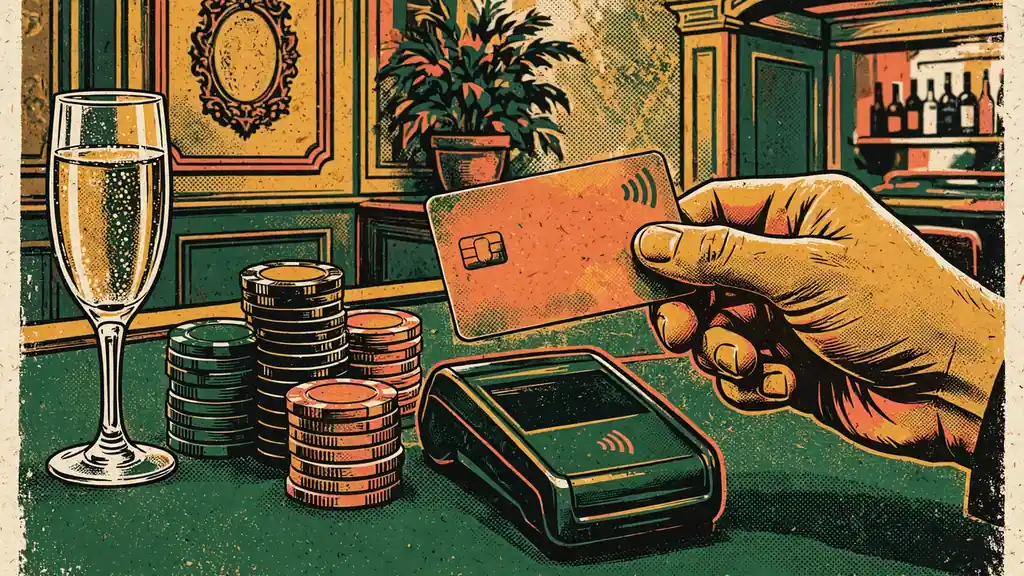
Availability is confirmed in the cashier, while card eligibility, withdrawal timing, bonuses and alternatives can vary by casino.
Upaycard Availability Has to Be Checked at the Cashier
A search for casinos that accept Upaycard in the UK can produce a long list of names, badges and payment guides. That does not make every listed site a current Upaycard option. Payment arrangements change, card products are treated differently, and a method shown in an older page may no longer be available when an account is opened.
The useful dividing line is the cashier. It is the part of the casino account where the currently enabled deposit methods are displayed. That is also where eligibility is tested for the particular card or payment product being used. A general payment logo elsewhere on the site is only an indication that a network or category may be supported. It is not confirmation that Upaycard will be accepted.
That distinction matters because “Visa accepted” and “Mastercard accepted” are broad descriptions. A casino may display either brand while applying separate rules to different card products, issuers or transaction types. The presence of a Visa or Mastercard mark therefore cannot, by itself, establish that an Upaycard deposit will go through. The cashier has the more relevant information.
I have seen this mismatch from the operational side. A payment page can be written as a general overview, while the cashier is configured according to the methods available to that account, market and payment provider at that moment. The two descriptions may not remain identical. The cashier wins.
Why an old listing is not enough
Lists of the “best Upaycard casinos” can look precise while leaving out the point that decides whether a deposit is possible: current card-product eligibility. A listing may have been prepared when a method was visible, may describe a payment network rather than Upaycard itself, or may simply carry forward wording that has not been checked against the live cashier.
The same applies to claims about new Upaycard casinos, mobile casinos or Android casinos. A site being accessible on an Android device says nothing about whether its cashier accepts this card. Likewise, a casino’s age, game catalogue or promotional branding does not establish a payment connection. Those are separate parts of the service.
Casinos That Accept USDC in the UK: What to Check
A payment logo is therefore evidence of branding, not a promise of approval. An old review is evidence of what its writer observed at an earlier point, not a live authorisation. Even a current-looking payment page should be treated as a starting point until the account cashier shows the method and permits the relevant transaction.
A specialist review can be useful for identifying sites worth checking, but it should not replace the live payment screen. This is especially important where a review uses broad wording such as “Visa casinos” or “card deposits”. Such language may describe the payment family without confirming a specific Upaycard product.
What the cashier actually establishes
The cashier answers a narrower and more practical question: which payment methods are available for this account now? If Upaycard is named there as an available method, that is materially stronger evidence than a logo on a landing page. If it is not shown, a general Visa or Mastercard reference does not fill the gap.
The relevant check is not whether a site has ever appeared in a list of Upaycard casinos. It is whether the live cashier identifies the card or route in terms that match the intended deposit. A card may carry a familiar network mark, yet the casino or its payment processor may not treat every product on that network in the same way.
This is why a universal ranking of the best Upaycard casinos cannot be stated responsibly from a static list. There is no confirmed basis for presenting an “all Upaycard casinos UK” directory, or for naming a best site, best bonus, best games selection or best new arrival on the strength of payment branding alone. The payment question must be settled before those comparisons have any practical meaning.
The same caution applies to the phrase “Upaycard deposit”. It describes the intended funding route, not a guaranteed result. A casino may advertise card deposits while the cashier presents only particular card brands or products. The product-level detail is the part that matters.
DO
- Check the live cashier for current availability
- Verify if the card supports both deposits and withdrawals
- Ensure account and payment details match the same identity
DON’T
- Rely on old reviews or static payment lists
- Assume a brand logo guarantees specific product acceptance
- Treat “instant deposit” as a guarantee of fast withdrawal
A sensible reading of payment information
The cleanest approach is to treat published payment information as provisional. It can indicate that card payments are part of the casino’s stated offering, but it cannot confirm that Upaycard is currently eligible. The live cashier is the controlling reference for that check.
This does not mean that every payment page is inaccurate. It means that payment availability is a live operational detail rather than a permanent feature of a casino’s identity. A site can retain a familiar Visa or Mastercard logo while the available routes, processor rules or card-product treatment have changed.
UK-facing remote gambling services also operate within an age and licensing framework. Real-money access is not created merely by finding a payment logo: the relevant operator must hold the required UK Gambling Commission operating licence, and customers must be aged 18 or over. Those conditions sit alongside, rather than replace, the cashier check.
So the answer to whether Upaycard casinos are still available in the UK cannot be taken from a badge, a search result or an old listing. Current availability has to be established in the account cashier, with attention to the exact card product shown there. That is the boundary around any reliable list of casinos accepting Upaycard in 2026.
Top online casinos in the UK
- JetsetspinsBonus: 200% Bonus + 100 Free Spins + Free Royal Wheel · Payout speed: 1-3 business days
- x3betBonus: Welcome Pack 100% Up to £1.000 + 200 Free Spins · Payout speed: 1-3 business days
- SlotoSportBonus: 500% up to £ 10 200+ 777 FS · Payout speed: 1-3 business days
- NightLuckBonus: Welcome Pack + 805% Up To 6400€ + 280 FS · Payout speed: 1-3 business days
- Revery PlayBonus: 100% up to€1,000+ 100 FS · Payout speed: 1-3 business days
- BeOnBetBonus: 100% up to €500 + 100 FS · Payout speed: 1-3 business days
- NightWinBonus: £900 + 400 free spins · Payout speed: 1-3 business days
- WinBeastBonus: €5000 + 500 FS + €650 Freebet · Payout speed: 1-3 business days
If Upaycard Is Not Offered, Other Payment Routes Work Differently
When a cashier does not show Upaycard, the practical alternatives are not one interchangeable group. Each route has its own funding model, eligibility checks and treatment at the casino. A debit card is not the same thing as a prepaid voucher, and neither works in the same way as open banking or an e-wallet.
Wirecard at UK Casinos: Deposit Acceptance Explained
That distinction matters because labels such as “alternative” can make different payment products sound equivalent. They are not. From the operator’s side, the route determines what information is available, how the transaction is authorised and whether the method can be used beyond the initial deposit.
Debit cards remain the familiar route
UK casinos commonly accept debit cards issued on the Visa or Mastercard networks. The relevant point is the word debit. Credit-card payments for gambling are not permitted at UK-licensed casinos, so a Visa or Mastercard logo does not mean that every card carrying it can be used.
This is also why a card brand alone cannot settle the question of eligibility. The cashier may display a network logo while applying separate rules to the card product, account or transaction. A current payment screen is more useful than an old comparison table, but even the payment screen only confirms what is offered at that point in the account process.
I have seen payment menus treated as a simple shopping list: choose a familiar logo, enter the details and move on. That misses the operational distinction. A debit card is connected to a bank account and is presented as a card payment. A prepaid product may be authorised under different conditions. The casino’s own cashier decides which route is available.
Open banking and bank transfers use the bank account directly
Open banking and bank transfers are another category. Instead of presenting a card number or voucher code, the payment is connected with a bank account and the transfer instruction. A specialist review reports that these methods can support instant deposits and fast withdrawals at many sites, although availability remains dependent on the casino and the particular service shown in its cashier.
Debit Cards
Commonly accepted via Visa or Mastercard networks for direct bank connections.
Open Banking
An account-to-account payment flow that can support instant deposits.
Prepaid Vouchers
Products like Paysafecard used for deposits only.
E-wallets
Services like Skrill or Neteller that sit between the bank and the cashier.
The two terms are related but should not be collapsed into one promise. Open banking normally involves an account-to-account payment flow, while a bank transfer may require the casino’s banking details and the player’s transfer instruction. The precise process is set by the remote gambling licensee and its payment provider.
This route can appeal to account holders who prefer not to use a card. It does not, however, establish that a casino accepts Upaycard, nor does it make every casino’s banking facility identical. The cashier remains the point at which the available route and its conditions are identified.
A further distinction is important: seeing “bank transfer” among the deposit methods does not by itself describe every possible transaction outcome. Payment availability can differ between funding and account-release processes, and the casino may apply its own checks. That is a reason to read the method information rather than treating the name as a guarantee.
Prepaid vouchers are deposit-only
Paysafecard is a prepaid voucher used for deposits only. It is therefore not a like-for-like replacement for a payment route that might be expected to cover the whole transaction cycle. Its function is narrower: value is purchased in advance and then applied to the gambling account where the casino supports the voucher.
The deposit-only character should be checked before selecting it. A method can be accepted at the point of funding while having no corresponding role when money is being returned. Calling every payment option a “cashier solution” hides that difference.
Casinos That Accept Giropay in the UK
Prepaid products also separate the purchase of the payment instrument from the casino account. The voucher balance and the gambling account are not the same thing. That can make the method suitable for a tightly defined deposit, but it does not make it equivalent to a debit card or bank-linked service.
E-wallets bring separate promotion conditions
Skrill and Neteller are e-wallets available at some sites. They sit between the bank account and the casino cashier: funds are held in the wallet, and the wallet then presents the payment to the operator. That structure is different from entering debit-card details or sending a bank transfer.
A specialist review reports that Skrill and Neteller are often excluded from promotions. This is a promotion condition, not evidence that the wallet cannot be used for a deposit. The cashier may accept the payment while the terms for a particular offer treat it differently. Deposit access and promotional eligibility must therefore be read as separate questions.
The same principle applies to other wallet arrangements. UK remote gambling licensees cannot accept wallet payments where the wallet allows credit-card funds to be used for gambling. The payment route has to comply with the underlying funding rules, not merely display a recognisable e-wallet name.
In practical terms, the alternatives to Upaycard fall into four different groups:
- Visa or Mastercard debit card: a card-based deposit route commonly used at UK casinos.
- Open banking: an account-linked payment flow offered through the cashier where supported.
- Bank transfer: a bank-to-bank route whose instructions depend on the casino and provider.
- Paysafecard: a prepaid voucher for deposits only.
- Skrill or Neteller: e-wallets available at some sites, with possible promotion exclusions.
That list describes how the methods work; it does not identify any casino as accepting Upaycard. The sensible comparison is between the actual route displayed, its deposit conditions and any restrictions attached to it. Different mechanism, different terms.
Deposits and Withdrawals Do Not Necessarily Follow the Same Timetable
A successful deposit is only the first step in the transaction chain. It confirms that the cashier has processed the funding request; it does not confirm that a later withdrawal will follow the same route or arrive on the same timetable. This distinction matters when assessing casinos accepting Upaycard debit cards in the UK, because a payment method shown for deposits still has to be considered separately for withdrawals.
In practice, the cleanest arrangement is one named account used consistently for both sides of the transaction. The account details and payment route should belong to the same customer. That alignment reduces the chance that basic ownership information creates avoidable friction when funds move back out of the casino account.
UK anti-money laundering rules generally require a payout to be returned to the original payment source used for the deposit.
The original-source principle is central here. UK anti-money laundering rules generally require a payout to be returned to the payment source used for the deposit. This is sometimes described as part of the closed-loop rules. It is not simply an internal preference added to a cashier page: returning funds through the original route helps remote gambling licensees establish where the money came from and where it is going.
That can make a withdrawal involving an Upaycard product more complicated than the initial payment suggests. A card may be displayed or accepted for funding, but the withdrawal stage can depend on whether that same product supports payouts and whether the operator can return funds to it. Where the original route cannot be used, an alternative may require additional verification rather than an automatic transfer to any account selected in the withdrawal form.
The timing gap is easy to underestimate. A card deposit can be instant, while the corresponding payout can take several business days. The two transactions are handled by different processes: the deposit is an authorisation to add funds, whereas the withdrawal must pass through the casino’s internal approval procedure before it reaches the payment network.
A specialist review describes withdrawal timing as including that internal approval stage, with first withdrawals potentially taking longer while verification is completed. That is a description of a reported process, not a fixed timetable for every casino or every Upaycard-related transaction. The relevant cashier terms remain more important than a general payment label.
Casinos That Accept UKash in the UK: What to Check
The first withdrawal can therefore involve checks that were not visible during the deposit. The operator may need to confirm account ownership, payment ownership and other KYC information before releasing the funds. If the account name and payment details do not line up, the transaction can face additional questions. The same applies when a different route is requested for the payout from the one used to fund the account.
This is why “instant deposit” and “fast withdrawal” should not be treated as matching claims. The first describes how quickly money may be credited to the gambling balance. The second depends on approval, verification, the payment route and the process used to return the funds. A specialist review identifies the casino’s approval process and the completeness of account verification as factors affecting withdrawal speed; those factors remain separate from the speed of the initial card transaction.
For a person checking whether Upaycard is still accepted by casinos in the UK, the practical sequence is therefore straightforward:
- Check whether the card product is available for deposits in the cashier.
- Check separately whether it supports withdrawals.
- Confirm the account and payment details use the same customer identity.
- Read the withdrawal conditions before treating an instant deposit as evidence of a quick payout.
- Allow for approval and KYC checks, particularly on the first withdrawal.
The payment label is only one part of the process. The payout route decides the rest.
Slot Access Is Separate from the Payment Method
A payment method and a casino’s game catalogue are separate parts of the account. A card, voucher or wallet is used to move funds; it does not create a special class of online slots. The games available after signing in are determined by the casino’s own catalogue, software arrangements and the account’s permitted access—not by the name printed on the payment option.
That distinction matters when looking for slots associated with Upaycard in the UK. A page describing “Upaycard slots” can suggest that certain machines have been designed for that card. In practice, a payment label is not a game title, a software provider or a guarantee that a particular slot will appear. It describes a possible funding route, subject to the casino’s cashier and the card product being eligible there.
I have seen this confusion arise when payment information is placed beside a game list. The layout makes the two things look connected, although the conditions are different. A casino may display a catalogue of slots and separately display payment methods. Neither display proves that every game can be funded through every listed method, and a payment method cannot be used as evidence that a particular game is available.
UK Casinos That Accept Pay N Play: How It Works
The same applies to real-money play. If an account is permitted to deposit through an accepted route, that establishes only the transaction function. It does not establish which online slots can be opened, whether a particular title is included in the casino’s offering, or whether the title remains available when the account is accessed. The payment route is the key to funding, not a filter for the game library.
“Free Upaycard slots” is also a misleading description of how casino games work. “Free” may refer to a play mode that does not use cash, but the payment method itself does not turn a real-money slot into a free game or provide a separate promotional version. Any free-play mode, bonus feature or promotional access would depend on the casino’s own terms.
The same caution applies to mobile wording. A reference to mobile play concerns the device or presentation of the casino service, not proof that Upaycard is supported on that device. Payment compatibility and mobile game access are separate checks. A mobile site or application cannot be treated as evidence that a specific card can fund play there.
For UK real-money slots, the sensible order is straightforward: establish that the casino account permits the intended game, then examine the cashier separately for an accepted payment route. The game screen answers what can be played; the cashier answers how funds may be handled. Neither replaces the other.
Payment vs Catalogue
Payment methods determine how you fund an account, not which games are available to play.
That is the useful dividing line. Payment first, catalogue second.
Real-Money Play Still Sits Behind Account Limits
A payment method does not decide whether real-money slot play is available. The important control comes earlier, at account setup. For customers opening an account with a UK remote gambling operator, the funding process must include a financial-limit prompt before the first deposit is made. That requirement applies to the account, not to a particular card, wallet or other payment route.
This distinction matters when looking for UK slots associated with Upaycard. A search for real-money slots using Upaycard may suggest that the card is the main issue, but payment eligibility and spending controls are separate questions. Even where a cashier displays a usable deposit method, the account still sits behind the operator’s limit-setting process. A payment route cannot bypass it.
What the limit prompt does
The initial prompt is intended to make the funding boundary an account decision before money is deposited. It is not a statement that Upaycard is accepted, and it does not identify particular slot games, a dedicated slots app or a specific casino site. It is a control applied to new customer accounts by remote gambling operators serving the British market.
The limit is also not confined to the first setup screen. UKGC rules require operators to make account-level financial-limit controls accessible after registration. In practical terms, the relevant tools should remain available within the gambling account rather than disappearing once the first deposit has been made.
Casinos That Accept AstroPay in the UK
From the operator side, this changes the order in which the transaction is handled. The account is created, the financial control is presented, and only then can the deposit stage proceed. The selected payment method remains a separate matter for the cashier. That separation prevents a card name from being treated as evidence that real-money play is available without the ordinary account safeguards.
A “no deposit” phrase does not remove this step. It may describe a promotion or a search for free play, but it does not turn a payment brand into a slot product or establish that a particular operator accepts Upaycard. Nor does the wording “play for money” alter the account requirement. Once gambling involves real-money funding, the operator’s financial-limit controls remain part of the process.
Why this matters for Upaycard searches
I have seen payment branding treated as if it settled every practical question: whether the site accepts the card, whether slots can be played for money, and whether the account can be funded without restriction. Those are different decisions. The account-limit requirement answers only the financial-control point.
It also helps separate a genuine account feature from marketing language. A site may describe its games, payment options or mobile access in promotional terms, but the limit control is an operational safeguard attached to the customer account. It does not prove that Upaycard deposits are supported, and it does not name any Upaycard-compatible slots.
The clean reading is straightforward: real-money slot access sits behind account controls, while payment compatibility must be established separately at the cashier. Two checks, not one.
Attention
Real-money play is subject to mandatory account-level financial-limit controls set during registration.
A Deposit Card Is Not a Credit Card
The important distinction in UK casino payments is not the card’s branding but the way the card is funded and classified. Remote gambling operators cannot accept credit-card payments for gambling. The prohibition took effect on 14 April 2020 and has not been relaxed, so a card that operates as a credit facility cannot be used to fund a gambling account at a UK-licensed casino.
Debit cards sit on the permitted side of that boundary. UK casinos commonly accept debit cards issued on the Visa or Mastercard networks. That does not mean every card carrying one of those brands will work. The cashier may assess the specific card product, issuer, country, and account details before allowing a transaction.
That is where searches for casinos accepting Upaycard become easy to misread. A reference to an Upaycard deposit, an old payment badge, or a page describing card payments does not establish that the product can be used now. It also does not establish whether the card is treated as a debit card, a prepaid product, or a credit facility. The current cashier response is the practical test, subject to the operator’s payment terms and UK gambling controls.
I separate three questions when checking a card-based deposit:
- Is the named card or payment product displayed in the cashier?
- Is it available for the account’s country and currency?
- Is it eligible for gambling transactions under the operator’s rules?
A positive answer to the first question alone is not enough. A card may appear in general payment information while being unavailable for a particular customer or unsuitable for withdrawals. Consistent ownership details also matter: using an account and payment route belonging to the same customer reduces avoidable friction when basic transaction information is checked.
The distinction matters for searches involving Upaycard debit deposits, direct withdrawals, or instant banking. None of those descriptions should be treated as proof that a particular casino supports the product, and “instant” describes a possible deposit experience rather than a guaranteed payout route. A specialist review reports that a card deposit can be credited instantly while the corresponding withdrawal takes several business days. The two stages are handled differently.
The same point applies to promotions. A card being usable for a deposit does not automatically make it eligible for a bonus, and a card payment does not create a “no deposit” offer. Those conditions belong to the promotion’s terms, not to the card network. Keep the categories separate.
Bonus Terms Can Exclude Otherwise Usable Payment Methods
A payment method can work for a deposit and still be left outside a welcome offer. That distinction matters when assessing casinos associated with Upaycard, because the ability to fund an account does not create a right to a bonus. A promotion is a separate contract, with its own payment exclusions, qualifying conditions and wording about when the offer is attached to a deposit.
This is where “eligible payment” can mean two different things. In the cashier, it may mean that the casino permits the method for funding. In the bonus rules, it may mean that a deposit made through that method counts towards the promotion. The first does not establish the second. The terms and conditions attached to the specific offer control.
Understanding Bonus Exclusions
Even if a method is accepted in the cashier, it may be excluded from specific promotional offers. Always check the terms and conditions of a bonus to see if your chosen payment route qualifies for the offer.
PayPal illustrates the point. A specialist review describes it as popular for speed and convenience, while also noting that a PayPal deposit may be excluded from bonus eligibility. That is not a universal statement about every promotion, nor does it establish anything about Upaycard. It does show why a payment badge and a bonus banner should not be read as one combined promise.
The same separation applies to Skrill and Neteller. A specialist review reports that these e-wallets are available at some sites but are often excluded from promotions. Availability therefore answers only the funding question. The promotion may still require a different payment route, or may state that deposits made through a particular wallet do not trigger the offer.
For anyone looking for a welcome bonus connected with Upaycard, the relevant wording would need to identify both the accepted deposit route and the qualifying route. An advert mentioning real-money slots, a bonus code or a no-deposit offer does not by itself show that an Upaycard transaction qualifies. Nor do references to sites with Upaycard establish that those sites attach a bonus to such a deposit.
The practical check is short: open the offer terms, find the payment-method exclusions, and compare them with the cashier’s available options. A qualifying deposit should be judged by the written promotion rules, not by the payment logo alone.
Different question.
Minimum Deposits and Mobile Wallet Availability Vary
A small opening deposit is not determined by the casino name alone. The payment method selected in the cashier can change the minimum, and the account may show different thresholds for a bank card, an e-wallet, a voucher or another route. A specialist casino review places the starting range at £10–£20, but that is an indication of the method-dependent structure, not a fixed Upaycard rule across UK casinos.
Casinos that accept EntroPay UK: check the cashier
That matters when looking for a £5 deposit. A search result or promotional label mentioning a low entry amount does not establish that Upaycard can be used for it. The relevant figures are the ones displayed after the account, currency and payment route have been selected. If Upaycard appears in the cashier, its own minimum is the operative condition. If it does not appear, a listed minimum for another method says nothing about Upaycard eligibility.
Mobile payment is a separate question. Some UKGC-licensed casinos accept Apple Pay for deposits, so a phone-based payment option may be available even where a particular prepaid card is not. Apple Pay support is not evidence that the casino accepts Upaycard, nor that Upaycard can be added to Apple Pay for gambling transactions. Those are separate product and cashier checks.
The same distinction applies to claims about an “instant deposit”. That wording describes the processing of a displayed payment route, not every card or wallet associated with the operator. A casino may show Apple Pay while omitting Upaycard, or show a card option whose eligibility depends on the issuing product. The payment panel is therefore more useful than a general methods page when checking a small deposit.
For UK customers, the sensible comparison is narrow: identify the available method, read its minimum, confirm the currency and check whether the route is enabled for the account. A £5 figure should not be treated as transferable from one payment method to another. Nor does a mobile wallet badge prove that a casino is a non-GamStop site or that it accepts Upaycard. Different checks, different evidence.
Does a payment logo guarantee acceptance?
No, a logo is a brand indication; only the live cashier can confirm if a specific product like Upaycard is currently enabled.
Can I use a credit card for gambling in the UK?
No, UK-licensed casinos are prohibited from accepting credit-card payments for gambling; only debit cards are permitted.
Is Upaycard acceptance linked to GamStop status?
No, payment method compatibility and GamStop self-exclusion status are entirely separate operational and regulatory matters.
Comparing Alternatives Means Comparing the Full Cost
A sensible Upaycard alternative is not necessarily the method with the most familiar logo. The useful comparison is the total cost of moving money into the casino account. That can include a charge from the casino, a fee from the payment provider, an issuer or bank charge, a network cost, and the exchange-rate spread applied when currencies are converted.
The visible fee is only one part of the calculation. A method showing no separate charge can still produce a less favourable result if its conversion rate is weaker. In my experience, that is where payment comparisons become misleading: the headline says “free”, while the cost is built into the rate. The spread matters.
The account currency should therefore be checked before a transaction is made. A mismatch can introduce conversion costs even where the deposit method itself does not display a fee.
There is no universal lowest-cost route. The result depends on the amount being moved, the currencies involved, the casino’s terms, the provider’s tariff, and any bank or network charge. A small fixed fee can matter more on a modest deposit; a conversion spread can matter more when the amount is larger. The comparison has to be made against the actual transaction, not against a generic ranking.
Skrill is described as one of the most common deposit choices on UK-friendly casino sites in a specialist review covering 2026. That describes its presence in the market, not acceptance of Upaycard, and it does not make Skrill the best option for every account. Jeton is also reported by that type of specialist review as available at a handful of UK online casinos in 2026. Its more limited availability makes the cashier particularly important before relying on it.
The same principle applies to any proposed “best” Upaycard alternative: availability and cost are separate questions. A method may appear in a payment list yet carry provider or conversion charges that change its value. Familiarity is not a price comparison.
Payment Choice Does Not Determine GamStop Status
An Upaycard logo, or the appearance of Upaycard in a cashier, says something about a payment route. It does not say whether the casino is connected to GamStop. Those are separate parts of the operating model: one concerns how funds are presented for a deposit, while the other concerns the operator’s relationship with a self-exclusion scheme.
That distinction matters when a site is described as a “non-GamStop casino”. The label is not established by accepting a particular card, voucher or wallet. Upaycard acceptance cannot be treated as proof that a site sits outside GamStop, just as GamStop status cannot be inferred from a payment page. A casino advertising both features would still need to be assessed on each claim independently.
I have seen payment pages used as shorthand for much more than they actually confirm. A cashier can show a method because the operator supports it for a particular account, currency or transaction type. That display does not certify the site’s self-exclusion position. Payment compatibility is a transaction detail, not a regulatory or account-safeguarding classification.
There is a separate control that does apply to UK remote gambling operators. Before a new customer makes a first deposit, the operator must prompt the setting of a financial limit. The account must also provide accessible controls for managing those limits. This requirement concerns how the gambling account is funded and controlled; it is not evidence that a casino is, or is not, connected to GamStop.
That makes the wording around “Upaycard slots not on GamStop” particularly easy to misread. The payment method does not determine which account safeguards apply, and it does not turn a casino into a non-GamStop venue. Slot availability, payment acceptance and self-exclusion status should remain separate checks.
The clean conclusion is narrow: an Upaycard deposit option cannot validate a non-GamStop claim. Where a site makes that claim, its status must be considered independently of the card displayed at the cashier. Payment branding is not proof.
What is the fastest withdrawal method for UK casinos?
PayPal, open banking and debit cards linked to fast payout systems are generally among the quickest options. Actual speed also depends on the casino’s approval process and whether your account is verified.
Are fast casino withdrawals guaranteed?
No. Withdrawal speed can be affected by the casino’s approval process and account verification, and a card deposit may be instant while the payout takes several business days.
Which payment methods are accepted in Great Britain?
UK casinos commonly accept Visa and Mastercard debit cards, and some also offer PayPal, bank transfers or open banking, Skrill, Neteller, Paysafecard and Apple Pay. The methods available vary by site and should be checked in its cashier.
Are Visa and Mastercard deposits definitely debit cards?
No. A Visa or Mastercard logo alone does not confirm which card products a casino accepts; check the cashier for the specific card eligibility. Credit card gambling is banned in the UK.
Is Skrill available?
Yes. Skrill is a common deposit method at UK-friendly casino sites, though it is offered only at some sites and may be excluded from promotions.