
Online European Roulette Casinos in the UK
 Available in GB
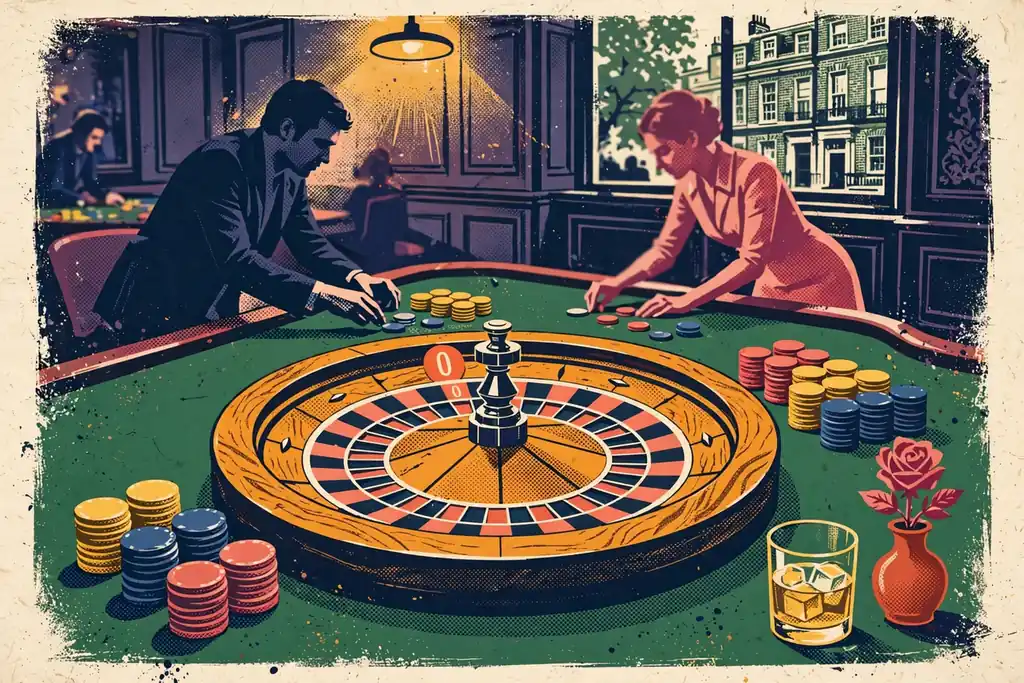
A guide to the single-zero format, table bets, game modes and the differences between European and American roulette.
What “European Roulette Casinos” Means in the UK Market
“European roulette casino” is not a separate legal category of operator. It is a description of the roulette product available on a casino site. That distinction matters because a platform can advertise a broad casino catalogue while offering no European roulette at all, or show a roulette title that belongs to another format.
I have seen this confusion from the operator side. A page may carry the word “roulette” in its navigation, while the actual lobby contains only a different variant, a live table with restricted access, or a demo game that cannot be played for real money. The casino’s general branding proves very little. The relevant question is whether the account lobby identifies a European roulette game and whether that game is available in the intended mode.
What to check in the game lobby
The first check is the game title and its rules panel. A proper listing should make the roulette variant clear rather than relying on a promotional label such as “classic”, “premium” or “VIP”. “European VIP roulette” may describe a table tier, presentation or limit structure; it does not, by itself, establish which roulette variant is being offered.
The second check is access. Some online casinos separate demo games from real-money games. A title may load without registration and still be unavailable once a real-money account is used, or it may be visible in a general catalogue but restricted by location, device or table status. The wording around the play button normally reveals whether the game is for practice or for real stakes.
Casino Games: Slots, Live Tables and Online Picks
The third check is the rules or information icon attached to the specific title. This is where the operator should identify the game’s variant, available wagers and payout schedule. A site that says only “roulette available” leaves too much unsaid. The useful evidence is attached to the game itself, not buried in a homepage banner.
That also prevents a common category error: European roulette is a casino table game, not a slot category. Search labels such as “European roulette slots” can lead to roulette-themed slot products, but a theme is not the same as an actual roulette table. A title with roulette imagery may use slot rules, reels and paylines instead of a wheel and ball. The name is not enough.
What “online casino” should mean here
An online casino with European roulette should provide a direct route from its casino lobby to the relevant game, with the game information available before wagering. That route may lead to an automated table or a live studio table, but the distinction should be visible. It is also sensible to separate the question of availability from the question of quality. A site can list the game and still have conditions that make it unsuitable, such as unclear rules, inaccessible account controls or bonus terms that treat roulette differently.
That is why “best European roulette casinos” is an advertising phrase rather than a reliable classification. There is no universal best label that confirms the game is present, the table suits a particular budget, or the operator’s terms are transparent. A more useful assessment starts with four plain checks:
- Is the European roulette title visible in the real-money lobby?
- Does the game’s own information panel identify the variant?
- Is the game available in the required format, rather than only as a demo?
- Is the operator authorised to serve customers in Great Britain?
The final point is not optional. It is the boundary between a casino claim and a lawful UK-facing service.
The UKGC boundary
The UK Gambling Commission, usually referred to as the UKGC, is the sole regulator of online casino activity in Great Britain. Remote gambling operators selling into the British market must hold the relevant Gambling Commission licence, wherever the business itself is based. A current operating licence is therefore part of the product check, not a decorative badge on the website.
Platforms without a valid UKGC licence cannot legally offer British residents real-money live roulette. The same principle applies when a site presents itself as an international casino or accepts registrations from elsewhere: offshore status does not replace authorisation to serve the British market. A foreign licence may describe the operator’s position in another jurisdiction, but it is not a UKGC licence.
I treat the licence search as a separate step from browsing the games. The operator’s name and licence details should be checked against the UKGC public register before depositing. A badge in a footer can be outdated, copied or attached to a different company within a group. The register is the meaningful reference point.
Wheel pockets
37
House edge
2.70%
Main variant
European (Single-Zero)
There is also a practical reason to keep these checks separate. Game availability can change without changing the operator’s legal status, while a licensing problem affects the legitimacy of the entire real-money service. “European roulette available” is only one statement. It does not answer who is providing it, under which authority, or whether the table is genuinely open to British customers.
That is the working definition of European roulette casinos in the UK market: identifiable European roulette games offered for real money by a properly authorised operator, with the game’s own rules and access conditions made clear. Everything else is presentation.
Top online casinos in the UK
- JetsetspinsBonus: 200% Bonus + 100 Free Spins + Free Royal Wheel · Payout speed: 1-3 business days
- x3betBonus: Welcome Pack 100% Up to £1.000 + 200 Free Spins · Payout speed: 1-3 business days
- SlotoSportBonus: 500% up to £ 10 200+ 777 FS · Payout speed: 1-3 business days
- NightLuckBonus: Welcome Pack + 805% Up To 6400€ + 280 FS · Payout speed: 1-3 business days
- Revery PlayBonus: 100% up to€1,000+ 100 FS · Payout speed: 1-3 business days
- BeOnBetBonus: 100% up to €500 + 100 FS · Payout speed: 1-3 business days
- NightWinBonus: £900 + 400 free spins · Payout speed: 1-3 business days
- WinBeastBonus: €5000 + 500 FS + €650 Freebet · Payout speed: 1-3 business days
The Single-Zero Wheel Behind European Roulette
European roulette is built around a wheel with 37 pockets. Thirty-six are numbered from 1 to 36, and the remaining pocket is a single zero. That green zero is the feature that defines the European format. It is not an extra winning number in the same sense as the numbered pockets; it is the additional outcome that gives the casino its mathematical margin.
This structure applies whether the game appears in an online casino as a digital table or as a streamed physical wheel. The presentation can change, but the underlying pocket count remains the same when the game is labelled European roulette. That is why the title of a table matters more than a general claim such as “roulette available”. A casino may offer several versions, and the wheel specification determines which odds belong to the game.
What the single zero does
Every spin ends with the ball coming to rest in one pocket. The numbered pockets represent the outcomes from 1 to 36, while zero sits outside that numbered range. A bet that depends on a particular number therefore has one relevant pocket among all the possible pockets. The casino does not need to influence the ball or select the result; the extra green pocket is already enough to create the built-in advantage.
Online Casino Tournaments UK: Rules, Prizes and Terms
The same principle affects broader selections. A wager covering several numbered outcomes can win when the ball lands in one of those chosen pockets, but zero remains an outcome outside the ordinary red, black, odd, even, high and low groupings. In practical terms, it is the interruption that prevents those broad bets from being perfectly balanced. The colour and number classifications do not absorb zero simply because it is printed on the wheel.
That point is often softened by casino language. “Balanced” or “even-money” describes the quoted return when a qualifying result appears; it does not mean that all possible outcomes are divided into equal winning and losing groups. The single zero is the part that remains outside the main categories.
How the house edge arises
The house edge for European roulette is 2.70%. It is a long-run mathematical measure, not a prediction about one session or one spin. A particular result can produce a win, a loss or a sequence that looks unusual. Over a large number of spins, however, the relationship between the 37 pockets and the stated payouts gives the operator its expected advantage.
I have seen this distinction cause confusion when game pages describe European roulette as offering attractive returns. The payout attached to a wager is only one part of the calculation. The other part is how many pockets can produce that result and how many remain outside it. Advertising tends to put the return in large type. The zero is usually quieter.
The single zero is the feature that defines the European format, acting as the additional outcome that creates the casino’s mathematical margin.
The edge does not mean that a casino chooses which pocket wins. It means that the rules and payouts are arranged so that the mathematical expectation favours the house. Randomness determines the immediate result; the wheel design determines the long-term relationship between stakes and returns.
Why the wheel specification matters online
An online European roulette casino can display the game with a compact interface, animated wheel or live studio feed, but the single-zero description should still be clear. The important mechanical question is whether the table contains 37 pockets: numbers 1 to 36 plus zero. If the game has a different pocket structure, it is not the same roulette variant, even if the screen uses similar colours and betting labels.
This is particularly important when several roulette products sit beside one another in an online casino. A standard European table, a themed table and a game based on another variant may look broadly alike while applying different rules. The name alone should not carry the whole explanation; the information panel or rules section should identify the wheel and its payouts.
The single-zero wheel also provides the reference point for later discussions of table positions and game formats. Number bets, groups of numbers and outside categories all relate back to the same set of pockets. The layout may arrange those choices for quick selection, but it cannot remove zero from the outcome space.
European roulette as the baseline
European roulette is often treated as the standard single-zero model because its structure is straightforward: 36 numbered pockets and one green zero. The house edge of 2.70% follows from that arrangement and the associated payout schedule. It is therefore the baseline against which other roulette wheels are assessed.
The difference between European and American roulette begins with the extra green pocket used in the American version. That changes the total number of possible outcomes and the mathematical balance of the game. The detailed comparison belongs to the variant discussion, but the mechanical lesson is simple: pocket count is not decoration. It is the foundation of the odds.
For an online European roulette casino UK audience, that is the useful starting point. Before the animation, dealer presentation or promotional wording, there is a wheel with a defined number of pockets. Everything else follows from it.
French Roulette Online Casinos in the UK: Rules
Choosing a European Roulette Casino Without Chasing a “Best” Label
“Best” is usually a marketing shortcut, not a useful category. In practice, the best online casino for European roulette depends on conditions that remain visible after registration: the game’s published information, account controls, payment rules, bonus terms and the operator’s regulatory status. I have seen attractive tables become poor choices once those details were checked.
Start with the operator, not the table
A current UK Gambling Commission operating licence is the first boundary. The licence number should be checked on the UKGC public register before depositing, rather than relying on a badge in the casino footer. A platform without a valid UKGC licence cannot legally offer real-money live roulette to British residents.
The licence does not make every offer equally suitable. UKGC-licensed operators must provide an internal complaints process and access to an approved Alternative Dispute Resolution service. Those routes matter when a withdrawal, bonus condition or account restriction is disputed. A polished interface is no substitute for an accountable operator.
Age verification is also part of the operating process. A casino must verify a customer’s age before allowing deposits into a gambling account. This can make registration less immediate, but it is a required control rather than an optional inconvenience.
Check what the game page actually discloses
A credible European roulette listing should make the relevant game information accessible before play. That includes the rules, the return-to-player information where provided, the table conditions and whether the game is an automated version or a dealer-streamed product. The word “European” alone is not enough; it should identify the actual game selected, not merely describe the casino’s wider roulette catalogue.
RTP information is particularly useful when comparing operators. It should be reachable from the game information panel, help section or terms rather than hidden behind a support request. Where several versions appear under similar names, the published details should make clear which rules apply to each one.
A free-play or demo version can help with navigation and presentation, but it does not establish how the real-money account will be managed. Demo access is a product feature, not proof of fair treatment, favourable bonus terms or suitable limits. Rules still deserve attention: the clearest operator explains how bets are accepted, when a round is settled and what happens if a connection fails.
Online Casinos Without ID in the UK: What It Means
Read the account and bonus controls
Responsible gambling tools are a practical comparison point, not decorative compliance text. UKGC-licensed casinos must provide self-exclusion, while remote operators must prompt new customers to set a financial limit before the first deposit and provide accessible account-level limit controls. The useful question is whether these controls can be found and changed through the account area without avoidable friction.
Payment restrictions also reveal how closely the site follows the UK framework. UK-licensed casinos cannot accept credit cards for gambling, including credit-card funding routed through a money service business. Wallet payments cannot be accepted where the wallet allows credit-card funds to be used for gambling. A payment page that explains these limits is clearer than one that leaves the reason obscure.
Bonus wording needs separate attention. Roulette may receive game weighting rather than counting fully towards wagering requirements, and the treatment can differ between live and RNG versions. The exact contribution, excluded games, minimum odds and withdrawal conditions belong in the promotion terms, not in a headline. An affiliate review reports that UK regulations introduced a maximum bonus wagering requirement of 10x from January 2026; the operator’s own current terms remain the controlling document.
The comparison is therefore less glamorous than a “best European roulette casino UK” badge. It is a check of licence status, disclosure, controls and conditions. That is the useful shortlist.
Playing for Money: Payouts, Rules and the Limits of Systems
Playing European roulette for real money is less about finding a clever sequence and more about understanding what happens when the zero interrupts an otherwise ordinary wager. The most important rule variation here is La Partage. It applies to even-money bets: when the ball lands on zero, half of the stake is returned rather than the whole bet being lost.
That changes the mathematical cost of those bets. With La Partage, the house edge on an eligible even-money wager falls to 1.35%. The rule does not turn the bet into an advantage play, and it does not alter the result of the spin. It simply limits the loss created by the zero on that particular outcome.
La Partage rule
When the ball lands on zero, half of the stake is returned rather than the whole bet being lost. This rule applies to eligible even-money bets and can reduce the house edge on those specific wagers to 1.35%.
That distinction is easy to miss in casino wording. “Better value” may refer only to the treatment of zero, not to a promise of profit. La Partage is a rule attached to the game, not a technique controlled by the player. It matters when comparing tables, especially where one European roulette game includes it and another does not, but it cannot make a chance-based result predictable.
What a roulette system can and cannot do
A betting system changes stake selection, not probability. The clearest example is Martingale roulette. After every loss, the player doubles the next stake, intending that a later win will recover previous losses and produce a gain equal to the original wager.
The arithmetic looks persuasive only while the losing run remains short. Each unsuccessful spin increases the next required stake, and the total amount already lost continues to accumulate. A losing streak can therefore put serious pressure on a bankroll before a winning result appears. The system has not improved the odds; it has concentrated more money behind the hope that the next spin will end the sequence.
I have seen this mistake made in both casual play and supposedly disciplined real-money sessions: a staking pattern is treated as though it were evidence of an edge. It is not. No roulette strategy can predict the final outcome, because the odds are determined by chance. A previous loss does not make a win due, and a sequence of wins does not make another win more likely.
Online Bingo UK: Rooms, Slots and Real-Money Play
Demo play and real-money decisions
Free European roulette can be useful for learning the betting controls, recognising how a round is opened and closed, and seeing how a selected stake appears on the interface. It does not reproduce the financial consequence of losing. That difference becomes important when moving from practice to real-money European roulette: the rules may look familiar, but the pressure attached to each decision changes.
The sensible comparison is therefore between the table rules and the staking conditions, not between systems claiming to beat the wheel. La Partage can reduce the edge on eligible even-money bets. Martingale can increase exposure after losses. Neither changes the underlying nature of roulette.
For anyone considering online play in the UK, “VIP” usually describes the presentation, limits or account tier rather than a different law of probability. A polished stream, private table label or higher-stakes environment does not give a system predictive power. The result remains determined by the spin.
Inside and Outside Bets on a Single-Zero Table
A European roulette single-zero table offers two broad groups of betting positions: inside bets placed directly on numbers or small clusters of numbers, and outside bets covering wider sections of the layout. The distinction is practical. Inside bets target fewer outcomes and carry larger quoted payouts; outside bets cover more outcomes and pay less when successful.
European roulette inside bets
The most focused option is the straight-up bet. A chip is placed on one number, including the single zero. If that number wins, the stated payout is 35:1. This applies to a European wheel and, in the same respect, to an American wheel. The single-zero format does not alter that published straight-up payout.
Straight-up bet
A chip is placed on one number, including the single zero, with a payout of 35:1.
Split bet
A chip covers two touching numbers on the layout, providing a payout of 17:1.
Street bet
A chip is placed at the end of a horizontal row of three numbers, paying 11:1.
A split bet covers two numbers that touch each other on the betting layout. The chip sits across the dividing line between them, so either number can produce a win. The stated return for a split is 17:1. It is less concentrated than a straight-up wager, but the payout is lower because the position covers two outcomes rather than one.
A street bet covers a horizontal row of three numbers. The chip is placed at the end of the relevant row, outside the line marking those numbers. A winning street bet pays 11:1. This is one of the clearest examples of how the table converts a wider selection into a smaller return.
I have seen “flexible” used in casino descriptions for these positions. In practice, that usually means the layout accepts several neighbouring-number combinations, not that the wager changes the underlying chance of any spin. The position determines which outcomes are covered; it does not forecast the result.
European roulette outside bets
Outside bets sit around the numbered grid and cover broader categories. The standard even-money options are:
- Red or black
- Even or odd
- High or low
Each pays 1:1 when the winning number fits the selected category. These positions are easier to read at a glance because they are marked as broad sections of the layout rather than individual-number areas.
Even-money does not mean risk-free. On a single-zero wheel, the zero is outside the red/black, even/odd and high/low classifications. A spin landing on zero therefore does not satisfy those selections. That is the point at which the apparent simplicity of an outside bet needs to be read alongside the table rules.
The same principle applies to the wider betting options generally: a larger covered group comes with a smaller quoted payout, while a narrowly targeted position offers a larger one. The 2.70% European roulette house edge is a property of the standard single-zero game, not a bonus attached to a particular-looking position. A payout table can show what a winning wager returns; it does not turn an inside or outside bet into a prediction.
In the betting area, clarity matters more than promotional labels. “High return” describes the 35:1 straight-up figure, not a better chance of winning. Plain mechanics are more useful.
RNG, Speed and the Online Roulette Wheel
Online European roulette is delivered in two distinct ways: through a random number generator (RNG) or through a faster automated format. Both can present the familiar single-zero game, but the experience between bets is different enough to affect how quickly a session develops.
Live Dream Catcher Casino UK: What to Check
RNG roulette: a simulated spin
An RNG roulette game uses software to generate the result of each spin. The animation represents that result rather than showing a continuously running physical wheel. Once the game has settled, the next round can be opened with little interruption.
That makes RNG roulette the most direct option for a casino with European roulette when speed and simple presentation matter. The interface normally shows the wheel or its result, the betting area and the round timer. The result is produced by the random number generator, not by a dealer’s action.
The lower operating cost of this format is also reflected in stake access. RNG roulette offers lower minimum stakes than many streamed alternatives, with some games starting at 10p. That does not make the outcome more predictable; it only changes how much can be committed to each round.
The main practical risk is rhythm. A short pause between spins can make decisions feel routine, while the account balance changes more frequently. I have found that the software’s clean design can hide that pace. The absence of a physical reset between rounds is not the absence of risk.
Understanding the wheel
A faster format or polished interface does not change the underlying mathematical probability of the game.
Speed roulette: fewer pauses
Speed roulette is built around a quicker delivery of results. It may use automated presentation and a rapid sequence of betting windows, so the game moves on before a standard table would have completed as many stages.
A specialist review gives speed roulette a rate of more than 150 spins per hour, compared with 80–100 spins per hour at a standard table. That is a description of pace, not a promise applying to every game or operator. The exact rhythm depends on the title, the betting window and the platform displaying it.
For a player comparing an online European roulette casino, the difference is operational rather than mathematical. A faster format does not improve the chance of a winning result. It simply creates more opportunities to place wagers during the same period, which can make a planned session run out of funds sooner.
What the online format changes
An online European roulette wheel can be shown as an animated wheel with a green zero and 37 pockets, but the image should not be confused with the process generating the outcome in an RNG game. The display communicates the result; it is not evidence that a physical ball has been released.
Speed also changes how results are reviewed. With RNG play, the history panel and round record become useful for checking recent outcomes, but a sequence does not create a forecast for the next spin. Each result remains chance-driven.
The sensible comparison is therefore between pace, interface and stake access. A slower screen does not create better odds, and a faster casino with European roulette does not create an advantage. Same game, different tempo.
Online Slots Payout Percentage: What RTP Can Tell You
Reading the European Roulette Table Layout
A European roulette table has two related parts: the circular wheel and the flat betting layout. The wheel contains 37 pockets: numbers from 1 to 36 and one zero. The table reproduces those labels in a rectangular arrangement, allowing the chosen position to be marked without placing a chip directly on the physical wheel.
The most important visual detail is the isolated zero. On a European layout, it sits apart from the numbered field rather than being absorbed into one of the regular number groups. This reflects the wheel itself: zero is a separate green pocket, while the numbered pockets run from 1 through 36. The table therefore makes a clear distinction between the main number area and the single zero position.
The numbered field is arranged in straight lines rather than in the circular order found on the wheel. Numbers that appear beside one another on the cloth are not necessarily neighbours around the rim. That difference matters when moving between the two parts of a live game. A dealer announces the winning pocket from the wheel, then marks the matching label on the layout; the visual path from wheel to table is a translation, not a continuation of the circle.
Outside the numbered field, the layout contains broader sections grouped by shared characteristics. These areas sit around the number grid and are visually separated from it, so the table can show both an individual number and a wider classification at the same time. The labels and colours are intended to make those groups recognisable at a glance, although the exact design varies between studios, software providers and casino interfaces.
RNG
Software used to generate the result of each spin in a simulated environment, where the animation represents the mathematically determined outcome.
An online European roulette casino table follows the same basic logic. In an RNG game, the result is displayed on a digital version of the layout. In a live game, the camera shows the physical cloth while the betting interface highlights the corresponding position. Some interfaces enlarge the latest result or display recent outcomes beside the table. That history can help with orientation, but it does not alter the arrangement of the wheel or table.
I have seen players treat the layout as a map of “patterns”. It is a map, but not a forecasting tool. The table shows where selections are recorded; it does not create a European roulette strategy capable of predicting which pocket will appear next. Keep the two views separate.
Lightning Roulette and the Difference Between Demo and Standard Play
Lightning Roulette looks familiar because it keeps the recognisable roulette wheel, numbered layout and outside-bet structure. The important difference sits in the treatment of selected numbers. A lightning multiplier can be attached to particular outcomes, changing the return when a qualifying straight-up bet lands. That makes the game a themed variant rather than a standard European roulette table with brighter graphics.
In standard European roulette, a straight-up wager on one number pays 35:1. A specialist review states that a Lightning Roulette straight-up bet without a lightning multiplier pays 29:1 instead. The distinction matters because the headline multiplier can draw attention away from the ordinary result. If the selected number has no multiplier, the base payout is not the same as the conventional European figure.
The outside bets are treated differently. According to a specialist review, red or black, even or odd, and high or low retain standard roulette odds in Lightning Roulette. The same applies to the other outside positions covered by the game’s rules: the lightning feature is not automatically added to every wager. In practical terms, the feature mainly changes selected-number outcomes, while an outside bet should not be assumed to receive a special enhancement.
Demo play is not a rules shortcut
A European roulette demo can be useful for learning where the controls sit, how the result display works and when bets close. It removes the pressure of using bonus funds or a cash balance, but it does not make every roulette-branded product interchangeable. A demo of a conventional European table may show a 35:1 straight-up return; a Lightning Roulette demo should display its own paytable and multiplier treatment.
The same caution applies to games presented with labels such as a three-dimensional European roulette title, a gold edition or a platinum edition. Those descriptions may identify a visual theme, a branded format or a particular game configuration. They do not prove that the rules match standard European roulette. The paytable is the operative document.
I have seen the interface create more certainty than the rules deserve. A familiar green zero and numbered layout can make a variant feel standard before the payout panel has been opened. That is where mistakes begin.
A European roulette slot demo also needs separate treatment. A slot-style product using roulette language may borrow the name without reproducing the table game’s betting positions or payouts. The word “roulette” in a title is not evidence of a physical-wheel simulation, a single-zero ruleset or Lightning Roulette mechanics. The displayed rules decide what the game actually offers.
Do
- Check the operator’s licence on the UKGC public register.
- Verify the specific game variant in the information panel.
- Use responsible gambling tools like deposit and loss limits.
Don’t
- Rely on a footer badge for licence verification.
- Assume “roulette” labels guarantee a specific table format.
- Treat betting systems as a way to predict random outcomes.
Live European Roulette: Dealers, Limits and Player Controls
Live European roulette is not a software animation presented as a table. The casino streams a physical wheel from a studio, where a human dealer spins the wheel and releases the ball. The camera feed, betting timer and settlement display are layered around that process, allowing the online table to retain the visible routine of a live casino.
That distinction matters when comparing a live dealer table with automated formats. The physical wheel and ball drop are operated in the studio, while the account balance, bet confirmation and controls remain part of the casino’s online system. A live European roulette table therefore combines a streamed game with account-level gambling controls.
Table minimums and format differences
Stake requirements depend on the table selected. A specialist review has reported UK live roulette tables starting at 10p, while auto-roulette and speed roulette formats in the same market have been described as starting at 5p. Those figures are not a permanent feature of every operator: the displayed minimum belongs to the particular table and can differ between live, automated and speed versions.
From the operator side, the minimum is only one part of the table information. The game rules, payout schedule and RTP information should be accessible before play. A low entry point does not alter the underlying chance of a spin, and it should not obscure the conditions attached to the account or any promotion.
Controls required in Britain
UKGC-licensed live casino operators must provide more than a streamed dealer. They must offer deposit limits and loss limits, together with session time reminders and reality checks. Cool-off periods must also be available, giving an account a temporary break without requiring permanent self-exclusion.
GamStop self-exclusion is another required safeguard for UKGC-licensed operators. It works at the scheme level rather than merely hiding one table, so a live roulette page should not be treated as separate from the wider gambling account.
Age verification comes before funding: operators must verify a customer’s age before allowing a deposit into a gambling account. The practical sequence is therefore identity and age checks first, followed by account funding and table access.
I have always treated these controls as part of the product, not decorative compliance text. If the limit settings are difficult to find, the live dealer is visible while the important account mechanics remain hidden. That is a poor arrangement.
European and American Roulette: The Extra Zero Changes the Odds
The central difference in European roulette vs American roulette is visible on the wheel: European roulette has 37 pockets, made up of numbers 1 to 36 and one zero. American roulette has 38, because it adds a second green pocket marked 00 alongside the single zero.
That extra pocket does not create another standard number bet. It creates another possible result on every spin while leaving the principal payout structure unchanged. A straight-up wager on a numbered pocket still pays 35:1, but the ball now has an additional losing outcome when the wager is placed on a number, colour, parity or range.
The mathematical effect is reflected in the house edge. European roulette carries a house edge of 2.70%, whereas American roulette carries a house edge of 5.26%. The gap comes from the larger set of pockets, not from a different way of spinning the wheel or presenting the game. More possible results are competing with the same stated returns.
That distinction matters when comparing an online European roulette casino game with an American table in the same lobby. The graphics may be similar, and both may be offered as digital or live versions, but the double zero changes the underlying probability. A polished interface does not soften it.
I have seen variant names treated as decoration in casino menus. They are not. “European” identifies a single-zero layout; “American” signals the presence of both 0 and 00. Checking that label before opening an online European roulette casino game is more meaningful than relying on a generic roulette thumbnail.
The comparison is therefore straightforward: the European wheel has fewer pockets and the lower house edge, while the American wheel adds 00 and produces the higher edge. The difference is built into the layout. Not the branding.