
Live Casino Lightning Roulette in the UK
 Available in GB
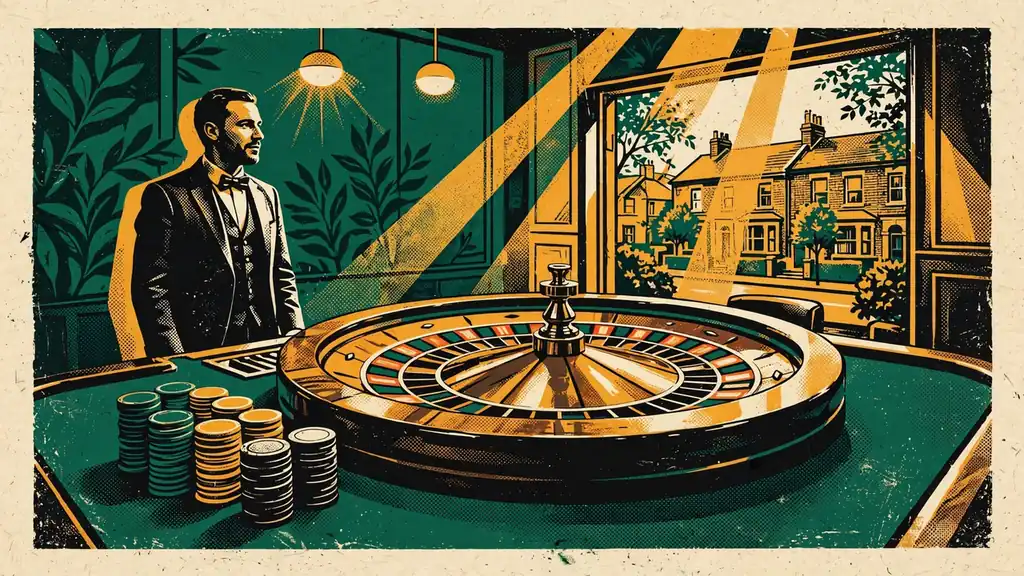
A practical guide to the live dealer format, demo play and the evidence behind casino listings.
How Lightning Roulette Fits the Live Casino Floor
Lightning Roulette belongs to the live casino rather than the conventional digital table-game category. The distinction is practical: the game is presented through a live studio environment, with a real roulette wheel and a dealer conducting the round while the betting interface remains online. The result combines the familiar structure of roulette with the atmosphere and pacing associated with a streamed casino table.
That makes it easier to place alongside other live casino products. Blackjack, baccarat and roulette are commonly offered in this format because their actions are visible and their rounds follow a clear sequence. A live table gives the game a central visual event: wagers are accepted, the wheel is spun, the result is shown and the table moves on. Lightning Roulette uses that same broad table logic. Its identity comes from the presentation and feature design built around roulette, not from becoming a different class of casino game.
Live Baccarat Online Casinos in the UK: Licensing
I have always found the table format more revealing than a static game screen. A conventional roulette interface can feel like a sequence of buttons and outcomes. A live casino table shows the dealer, the wheel and the timing of the round. That does not alter the underlying chance of the result, but it changes how the game is experienced. The pace is shared with other people at the table, and the visual confirmation of each stage is part of the product.
The word “live” is sometimes used as if it means personal service or a guarantee of a more authentic result. In practice, it primarily describes the delivery method. The wheel is filmed in a studio and the video feed is integrated with the online betting panel. The casino account still records the wager digitally, while the table supplies the visible dealing or spinning action. It is a hybrid format: physical presentation, online access.
A Lightning Roulette casino may therefore place the game beside standard roulette, blackjack and other live offerings in its casino lobby. Its position on that floor does not, by itself, tell anything about the operator’s quality, licensing status or account conditions. It only indicates that the title has been included in the available game catalogue. Those are separate questions, and treating the catalogue as an endorsement is one of the easier mistakes to make.
The live casino model has been established in the UK for some time. Grosvenor introduced its live casino offering in 2013, with games that included Blackjack, Texas Hold’em and Roulette. That history helps explain why a live casino lightning roulette table is not an unusual departure from the casino floor. It is part of the wider move to deliver recognisable table games through an online studio.
Live Dream Catcher Casino UK: What to Check
The regulatory framework sits around the operator and its remote service, not around the camera angle or the appearance of the table. The UK Gambling Commission is the sole regulator for commercial gambling in Great Britain and oversees gambling activity, including online casino services. Its remit covers remote gambling offered to Great Britain consumers even when essential equipment is located elsewhere. The Commission grants operating licences to gambling businesses and personal licences to relevant individuals.
That context matters before the table is treated as entertainment or a place to wager. A polished stream can make an online casino feel established, but presentation is not proof of regulatory standing. Gambling should remain limited to money that can be afforded to lose. The studio may look immediate; the financial consequences remain real.
Top online casinos in the UK
- JetsetspinsBonus: 200% Bonus + 100 Free Spins + Free Royal Wheel · Payout speed: 1-3 business days
- x3betBonus: Welcome Pack 100% Up to £1.000 + 200 Free Spins · Payout speed: 1-3 business days
- SlotoSportBonus: 500% up to £ 10 200+ 777 FS · Payout speed: 1-3 business days
- NightLuckBonus: Welcome Pack + 805% Up To 6400€ + 280 FS · Payout speed: 1-3 business days
- Revery PlayBonus: 100% up to€1,000+ 100 FS · Payout speed: 1-3 business days
- BeOnBetBonus: 100% up to €500 + 100 FS · Payout speed: 1-3 business days
- NightWinBonus: £900 + 400 free spins · Payout speed: 1-3 business days
- WinBeastBonus: €5000 + 500 FS + €650 Freebet · Payout speed: 1-3 business days
What “First Person” Changes at the Table
“First person” describes the viewpoint, not a new version of roulette. The wheel, numbered layout, wager types and outcome logic remain those of the underlying Lightning Roulette game. What changes is the way the table is shown and how the player moves through it.
In a conventional live-casino view, the camera presents the table from a wider angle. The dealer, wheel and betting area are visible together, much as they would be from a seat across the table. A first-person presentation narrows that relationship. The interface is designed to place the player closer to the action, with the wheel and table controls occupying the main field of view rather than appearing as part of a distant studio shot.
A first-person presentation narrows the visual relationship, placing the player closer to the wheel and table controls rather than showing a distant studio shot.
That distinction matters because live roulette has two jobs to perform on screen. It must show the physical game taking place, and it must give the player a usable way to select wagers before the betting period closes. A first-person interface gives more visual weight to the second job. The betting layout, chip controls, selected positions and balance display are arranged as part of the player’s immediate viewpoint.
I have always found that this kind of design changes attention before it changes anything else. In a wide camera view, the eye tends to follow the dealer and the movement around the table. In a first-person view, it stays closer to the wheel, the betting grid and the confirmation of the current selection. The experience can feel more direct, but “more direct” is a presentation claim, not evidence that the game offers better chances.
Seeing the table from the player’s side
The useful part of first-person roulette is the relationship between the visual scene and the controls. A chosen wager should be apparent on the layout. The wheel sequence should remain visible enough for the result to be followed. The live feed should not be treated as decoration separate from the betting interface: it is the table being played, while the digital controls are the means of joining that table.
That makes first-person Lightning Roulette a camera-and-interface choice within the same casino game. It should not be confused with a separate ruleset, a different wheel, or a special category of roulette. The label describes how the session is experienced, not what mathematical event determines the result.
The distinction also helps explain why the same title may feel different across casino interfaces. One presentation may prioritise the dealer and studio. Another may bring the wheel closer and make the betting surface more prominent. The underlying name can stay the same while the balance between atmosphere and control changes.
Online American Roulette Casinos in the UK
Live casino presentation developed as operators looked for ways to make streamed table games feel less remote. Grosvenor, for instance, introduced its live casino offering in 2013, with games including Blackjack, Texas Hold’em and Roulette. That history places first-person viewing within the broader evolution of live tables: the physical dealer and equipment remain central, while the screen design determines how closely the player feels connected to them.
The practical judgement is simple. First-person is useful when the layout is clear, the live action remains readable and the controls do not obscure the table. It is less useful when immersion becomes a substitute for understanding what has been selected or when fast visual movement encourages hurried decisions.
A closer view is still only a view. Wagers should be limited to money that can be afforded to lose, and the first-person label should never be read as an indication of improved odds.
The Roulette Game, Not a Slot: What the UK Limits Mean
Lightning Roulette is a roulette game with an added feature, not an online slot presented with a wheel on screen. That distinction matters because the Great Britain rules discussed in connection with online slot stakes are tied to the slot category. They should not be copied across to a live or digital roulette table simply because both products appear in the same casino lobby.
A specialist affiliate review reports the slot limits as £5 for a game cycle when the customer is aged 25 or over, and £2 when the customer is aged 18 to 24. Those figures describe the amount that can be staked on an online slot game cycle. They are not a stated roulette ceiling.
Attention Slot stake limits for Great Britain do not automatically apply to roulette or blackjack tables.
The same type of review says that these Great Britain slot restrictions do not cover roulette or blackjack. In practical terms, that means a person considering a Lightning Roulette casino game should not assume that the slot figures determine the table’s permitted stake. Roulette operates as its own casino-game category, even when delivered online and even when the title includes extra features such as random number multipliers.
That does not make every roulette table identical. The available stake options, table rules and account controls remain matters to check in the relevant game and operator information. The important point is narrower: a slot limit is not automatically a roulette limit. Treating the two as interchangeable creates a false impression of what the displayed figures mean.
I have seen this confusion arise when a casino groups slots, roulette and blackjack under one “casino” heading. The menu is convenient; the regulatory treatment is not necessarily uniform. A product’s label and game mechanics matter more than the section of the lobby where it is listed.
The phrase “play Lightning Roulette casino game” therefore needs a precise reading. It refers to participating in a roulette product, not spinning an online slot. The word “Lightning” describes the game’s feature set; it does not turn roulette into a slot for the purpose of the slot stake figures described above.
Any permitted stake still represents money at risk, and roulette outcomes remain uncertain. Gambling should be limited to money that can be afforded to lose. That is the useful boundary. Identity checks, account controls and operator access are separate matters; they do not change the classification of the game or convert a roulette table into a slot.
Online European Roulette Casinos in the UK
Trying a Demo Without Confusing It with Real Play
A demo version of Lightning Roulette is a practice presentation, not a separate roulette ruleset. It may reproduce the table layout, number selection and lightning-number feature while keeping the outcome disconnected from a cash balance. That distinction matters because the screen can look almost identical in both modes. The visual signal is not proof that money is involved.
I have seen “demo” used rather loosely in casino menus. Sometimes it means a clearly labelled free-play version. Elsewhere, a game tile opens only after an account has been created, or the available mode depends on the operator’s platform and the provider’s arrangement. A page may promote Lightning Roulette without establishing that a playable demo exists. The wording needs checking at the point where the game actually opens.
There is no dependable UK-wide list of operators offering a Lightning Roulette demo, and no single set of terms governing how such a mode works. Availability, account requirements, virtual credits, session conditions and access to particular features can therefore differ. Those details should be treated as operator-specific rather than inferred from the game’s name.
What a practice round can show
A demo is useful for understanding the flow of a live table:
- where roulette selections are placed;
- how the round is presented;
- how a highlighted number or multiplier is displayed;
- when the betting phase closes;
- how the result appears on the interface.
It cannot establish how a real-money account will be handled, nor does it turn a free round into evidence about an operator’s wider service. A practice balance has no cash value, and a favourable sequence in demo mode says nothing about future results. The game remains chance-based.
The distinction also prevents a common category error. A specialist review has stated that Great Britain’s online slot stake limits do not apply to roulette or blackjack. That statement should not be carried over as a general claim about every demo or every casino condition: a free-play screen has no stake at all, while any real-money terms belong to the operator and the applicable game.
“Try before depositing” sounds straightforward. In practice, it means confirming that the mode is genuinely free, seeing whether the displayed game is Lightning Roulette rather than a similar roulette product, and keeping the practice session separate from decisions involving money. I keep those two purposes apart. Better discipline.
Understanding a Demo
- Confirm the game is Lightning Roulette
- Verify the mode is genuinely free
- Observe the round flow and multiplier display
- Keep practice sessions separate from real-money decisions
Playing Online: The Checks That Come Before a Deposit
Playing Lightning Roulette online in the UK starts with the operator, not the table. A polished lobby, live video window or familiar game title does not establish that the site can legally serve customers in Great Britain. Remote operators offering gambling to Great Britain consumers must hold the relevant Gambling Commission licence, wherever their key equipment or business offices are located.
I treat the licence check as a gate, not a decorative badge. The operator’s legal name, trading name and licence number should be identifiable on its website. Those details can then be checked against the UK Gambling Commission’s public register before any funds are deposited. A logo in the footer is not enough; the register is the place to confirm that the licence exists and covers the relevant remote activity.
The account-opening process also has practical safeguards. The operator must verify age before allowing a customer to deposit. New customers must be prompted to set a financial limit before the first deposit, with account-level controls available afterwards. These are part of access mechanics, not optional features added around the game.
High-RTP slots in the UK: how to compare returns
Payment method matters as well. UK-licensed casinos cannot accept credit cards for gambling, including arrangements that route credit-card funds through a money service business. A wallet cannot be used for gambling where it permits credit-card money to fund the transaction. A payment option appearing at checkout therefore does not automatically mean it is permitted for this use.
The operator should also provide responsible-gambling tools, including self-exclusion, and explain its internal complaints process and access to an approved Alternative Dispute Resolution service. Those details show how disputes and account concerns are handled after registration.
Only after these checks does the question of joining a live table become relevant. I have seen the game itself receive more attention than the licence behind the cashier. That reverses the order that matters.
Any gambling decision still carries financial risk. Wager only what can be afforded to lose.
How to Assess a Casino Offering Lightning Roulette
A casino’s game catalogue is only the first piece of evidence when assessing a site offering Lightning Roulette. The more important question is whether the operator can lawfully provide remote gambling to customers in Great Britain. A polished lobby, familiar game title or live-table label does not answer that question.
Verification Priority
A polished casino lobby is not proof of regulatory standing; always check the Gambling Commission public register.
The practical starting point is the public register maintained by the UK Gambling Commission. The Commission regulates commercial gambling in Great Britain and issues operating licences to businesses, as well as personal licences for individuals working in relevant roles. For an online casino, the business entry matters: it should identify the operator behind the site and show the licence relevant to remote gambling.
That distinction is easy to miss. A brand name may differ from the legal company name. A casino may also use a trading name, a domain that does not resemble its corporate identity, or several websites under one business. Assessment therefore involves matching the public-facing brand with the registered business, rather than treating a licence badge on the casino website as proof by itself.
What the register can establish
The register can confirm whether a named business appears within the UK regulatory system and whether its permission covers the type of gambling being offered. It does not, by itself, establish that Lightning Roulette is currently available, that every advertised table is accessible to every account, or that the casino provides good value. Those are separate claims requiring separate checks.
For a site presenting itself as one of the Lightning Roulette casinos UK players can use, the relevant trail should be coherent:
- the casino’s legal operator should be identifiable;
- the operator should appear on the Gambling Commission’s public register;
- the permission should relate to remote gambling offered to Great Britain consumers;
- the website’s brand and domain should be connected to that registered business;
- the game should appear in the operator’s own catalogue or live-casino section.
I treat a broken link in that chain as a reason to stop the assessment, not as a minor presentation issue. The licence is the foundation. The game listing comes after it.
The position concerning LuckyPays illustrates why this needs checking rather than assumption. A specialist review reports that a Gambling Commission register check dated 26 September 2026 did not show a LuckyPays entry under that brand or under the stated domain, including luckypays.io. That report should not be turned into a permanent description of the register, because register information can change. It does mean that the operator’s status requires direct verification before any deposit or account funding is considered.
Matching the game claim to the operator
A casino may advertise Lightning Roulette through a banner, an affiliate description or a general list of live games. None of those alone proves that the table is supplied to the account in question. The useful check is made on the operator’s own website after the business identity has been established.
The catalogue should identify Lightning Roulette as a playable live casino product, rather than mentioning it only in promotional copy. The page should also make clear whether the game is available in the relevant jurisdiction and whether access depends on account status, location or other stated conditions. If the title appears in an old article but not in the current lobby, the claim is stale.
This is where the phrase “offering Lightning Roulette” can become misleading. It may describe a current table, a temporarily unavailable game, a provider page copied into a casino’s marketing material, or a title that is visible only after registration. The wording needs testing against the live catalogue and the operator’s terms.
A game provider is a separate entity from the casino operator; a recognized provider does not replace the requirement for the operator to hold a valid licence.
I also separate the operator from the provider. A casino can host a game supplied by another company, but that relationship does not replace the casino’s own obligation to hold the appropriate Gambling Commission permission for remote gambling to Great Britain. A recognised game provider is not a substitute for a licensed operator.
Evidence beyond the licence badge
The licence check establishes the legal starting point, not the complete quality of the casino. A serious assessment records the operator identity, domain, register entry and the exact game page used to confirm availability. Screenshots or dated notes are useful where catalogue content changes, particularly when a page promotes a product that later disappears.
The site’s account terms should also be read for practical conditions affecting play. Responsible-gambling controls should be visible, including self-exclusion. UK-licensed casinos must provide an internal complaints route and access to an approved Alternative Dispute Resolution service. Those details show whether the operator explains what happens when a payment, account or game dispute arises.
Payment wording deserves the same attention. UK-licensed casinos cannot accept credit cards for gambling, including arrangements that route credit-card funds through a money-service business or a wallet that permits credit-card funding. A payment page that appears to invite such funding would conflict with the regulatory framework and would warrant caution.
Age and account controls are another basic test. Operators must verify a customer’s age before allowing a deposit into a gambling account. New customers must also be prompted to set a financial limit before the first deposit, with account-level controls available afterwards. These are operational signs of a regulated service, not decorative responsible-gambling language.
French Roulette Online Casinos in the UK: Rules
No catalogue should be treated as a recommendation merely because it contains Lightning Roulette. My own assessment stops at what can be matched and documented: the operator, the relevant register entry, the domain, the game listing and the account protections. Everything else is marketing until supported. Gambling should remain limited to money that can be afforded to lose.
Choosing an Online Casino: What “With Lightning Roulette” Actually Tells You
A casino describing itself as offering Lightning Roulette is making a game-availability claim. It is not, by itself, a statement about the operator’s legal status, customer service, payments, or suitability for British players. The title identifies one product in a catalogue; it does not certify the business behind the catalogue.
That distinction matters because an online casino may present its games through several layers. Lightning Roulette might appear on a lobby page, inside a live-casino category, or in a search result within the account area. The same title may be visible before registration, while access to the table depends on location, account status, technical compatibility, or the operator’s current arrangement with its game supplier. A displayed tile is therefore evidence that the title is being promoted or indexed, not automatic proof that every visitor can play it.
I have seen this wording treated as though it were a quality mark. It is not. “With Lightning Roulette” means, at most, that the casino associates itself with that game. The phrase says nothing about whether the table is currently active, whether it is available for real-money play, or whether the surrounding service meets the standards expected of a properly authorised British-facing operator.
Separate the game claim from the operator claim
The game and the casino are different objects to assess.
DO
- Verify the operator’s licence on the public register
- Match the brand name to the legal entity
- Confirm the game is in the current live catalogue
DON’T
- Assume a game title is a quality mark
- Treat a casino lobby as an endorsement of licensing
- Equate a game provider with a licensed operator
Lightning Roulette is the product a player is looking for. The online casino is the business accepting the account, handling deposits and withdrawals, applying its terms, and providing the gambling service. Finding the first does not establish the second. A catalogue can be accurate about the game while leaving important questions about the operator unanswered.
That is why a page advertising an online casino with Lightning Roulette should be read in two passes:
- Confirm what is actually being offered. The title should appear in the casino’s own current catalogue or live-game area, rather than only in an advert, comparison page, or old promotional article.
- Identify who operates the service. The brand name may not be the same as the legal entity named in the account terms or licence information.
- Match the service to the relevant market. A game page aimed at an international audience does not necessarily show that the same service is offered to consumers in Great Britain.
- Treat availability as changeable. Game libraries are commercial inventories, not permanent promises. A title can be added, removed, renamed, or restricted without changing the casino’s branding.
This is not an argument against the game. It is a warning against allowing one attractive catalogue entry to do the work of several separate checks.
Why the licence remains a separate question
For remote gambling supplied to consumers in Great Britain, the operator must hold the relevant Gambling Commission licence. The obligation attaches to the remote gambling service and the market it serves; it does not arise merely because a casino lists a recognised live game.
That makes the licence relevant even when the game page looks complete. The presence of rules, a live dealer interface, payment buttons, or a responsible-gambling link does not replace confirmation of the operator’s authorisation. Nor does the use of a familiar game name establish that the casino itself is licensed for British customers.
The practical comparison is simple: the catalogue answers “What game does this casino say it offers?” The licensing record answers “Is this operator authorised to provide remote gambling to the British market?” Those answers may be connected, but they are not interchangeable.
The public register should therefore be checked using the operator’s legal name, trading name, and any domain shown in the account or licence information. The relevant entry should correspond with the site being considered. A licence belonging to an unrelated company, a broken register link, or a vague badge on the website is not the same thing as a confirmed match.
Checking Availability
“Available” can describe different stages. A title might be visible in a public lobby but require registration, or it might be a demonstration interface rather than a real-money table.
Read “available” with care
“Available” can also describe different stages of the customer journey. A title may be visible in a public lobby but require registration before its table loads. It may be listed in a general casino menu while not being enabled for a particular account or jurisdiction. A demonstration interface, where one exists, is not the same as a funded real-money table.
The wording should consequently be tested against the operator’s own terms and live lobby, not expanded into claims the page does not make. A casino that lists Lightning Roulette has identified a possible route to that game. It has not automatically established fair treatment, reliable withdrawals, suitable limits, or regulatory approval.
Those matters belong to the operator assessment, while the game listing answers only the narrower availability question. Before any deposit, age verification must be completed, the relevant licence number should be checked on the Gambling Commission register, and the account’s financial-limit controls should be understood. Gambling should remain limited to money that can be afforded to lose.
A game title opens the investigation. It does not finish it.
What “Best” Can Mean Without a Verifiable Ranking
“Best” is a useful word in advertising because it sounds decisive while leaving the standard undefined. In a search for a Lightning Roulette casino, it may refer to the game being available, the table presentation, the cashier, customer support, payment methods, or simply the operator’s preferred promotional position. Those are different claims, and they cannot be treated as one measured quality.
Online Bingo UK: Rooms, Slots and Real-Money Play
I have seen this wording used as if it were a settled award. It is not. A casino calling itself the “best online Lightning Roulette casino” has made a marketing statement unless it also explains the comparison: which operators were assessed, what criteria were used, when the checks took place, and why one result outranked another. Without that framework, the badge tells more about positioning than performance.
A more useful meaning of “best” is personal fit. One customer may care about a clean live-table interface. Another may place more weight on the operator’s terms, account controls, complaints route, or whether the game is actually available when the account is being used. None of those preferences creates a universal winner. A label can point to a feature, but it cannot replace the evidence behind the operator.
For a UK-focused choice, legality is not a decorative detail. Remote gambling offered to customers in Great Britain falls within the Gambling Commission’s licensing system, so an operator serving that market needs the appropriate licence. That status should be checked against the Commission’s public register rather than inferred from a logo, a search result, or a phrase such as “UK casino”. The register check establishes a regulatory condition; it does not, by itself, prove that the casino is the best fit.
That distinction matters because several statements can be true at once:
- a casino may list Lightning Roulette;
- its marketing may describe the site as “best”;
- the operator may have the relevant British licence;
- none of those points alone demonstrates a superior overall offer.
The word also has a time problem. Game catalogues, terms and operating arrangements can change. A ranking that was credible when written may no longer describe the same service later. Any serious comparison therefore needs a date, identifiable criteria and evidence that can be revisited. Without those, a confident order of casinos is largely presentation.
My own rule is simple: treat “best” as a heading for investigation, not as a result. The meaningful question is what the claim is based on and whether that basis can be checked independently. If it cannot, the honest description is not “number one”; it is an operator whose particular features may or may not suit the intended use.
No badge settles that. Before any deposit, gambling should remain limited to money that can afford to be lost.
A UK Casino Shortlist Needs Evidence, Not a “Best” Badge
A UK shortlist of casinos offering Lightning Roulette should contain more than familiar branding and a game title. Each entry needs a current connection between the operator, the game catalogue and the British licensing framework. Without those links, calling a group of sites the “best Lightning Roulette casinos in the UK” turns an advertising label into a conclusion.
Essential Checklist
- The Gambling Commission is the sole regulator for commercial gambling in Great Britain.
- A casino’s game catalogue is separate from its regulatory status.
- A licence belongs to the operator, not the game itself.
- Always gamble only with money that can be afforded to lose.
That distinction matters because a casino may display Lightning Roulette in promotional material while the relevant operating position remains unclear. The Gambling Commission is the regulator for commercial gambling in Great Britain, and remote operators serving British consumers must hold the appropriate licence. A shortlist that does not account for that requirement is not a UK shortlist in any meaningful sense.
The public register is therefore the starting point for any named entry. A dated specialist review reports that the register checked on 26 September 2026 did not show a LuckyPays entry under the LuckyPays brand or its stated domain, including luckypays.io. That is not evidence that every service associated with the name has the same status forever; register information can change. It does mean that the name should not be presented casually as one of a verified group of leading UK casinos.
The same discipline applies to every other operator. A game tile, a search result or a “best” badge does not establish that the business currently has the relevant permission to offer remote gambling to Great Britain. The licence belongs to the operator, not to Lightning Roulette itself. Game availability and regulatory status are separate claims.
For that reason, no responsible UK ranking can be assembled from reputation language alone. A defensible shortlist would need identifiable operators, a current register entry and a clear basis for saying why those operators belong together.
That is less satisfying than a neat ranked list, but it is commercially cleaner. I have seen how “top” labels get attached to pages before the underlying checks are done. The badge arrives first; the evidence never does.
Any real-money choice still involves financial risk. Gambling should be limited to what can be afforded to lose, and a casino’s appearance in promotional content should never be treated as proof that it is suitable or licensed for British play.
Online Casinos Without ID in the UK: What It Means
The Live Dealer Is Part of the Format, Not a Casino Ranking
Live casino developed by putting a streamed table between the conventional online interface and the physical casino floor. Instead of presenting only software graphics, the format shows a real table environment, with a dealer managing the round while the game is delivered online. Roulette became a natural part of that transition because its structure is easy to follow on camera: wagers close, the wheel turns, the ball settles, and the result is recorded.
Grosvenor first introduced its live casino offering in 2013. Its range included Blackjack, Texas Hold’em and Roulette, showing how the format was positioned from the outset as a broader casino service rather than a single game. Lightning Roulette belongs to that live-table tradition, but its title does not turn the dealer into a casino recommendation. It describes the game format, not the standing of the operator hosting it.
Online Casino Tournaments UK: Rules, Prizes and Terms
That distinction matters when “live dealer casino” appears in a description. The phrase can indicate that the table is presented through a live broadcast and that a dealer conducts the round. It does not, by itself, establish who operates the site, which licence covers the service, or whether the overall account terms suit the customer. A live table is a product feature. It is not a quality certificate.
I have always found the table experience more revealing than the promotional label. The dealer’s presence supplies a visible rhythm: the betting phase opens, wagers are accepted, the round is closed, and attention moves to the wheel and result. That sequence makes the game feel closer to a casino floor, while the underlying roulette rules remain the basis of play.
For a UK audience, Lightning Roulette as a live dealer game should therefore be understood as an online presentation of roulette, not as proof that a particular casino is preferable. The table can be engaging without being a reason to overlook the operator’s status or account controls. Any gambling session should use only money that can be afforded to lose. The atmosphere is part of the format. Nothing more.
Are online casino games licensed and regulated?
Yes. The UK Gambling Commission regulates online gambling in Great Britain, and remote operators serving consumers there must hold the relevant licence.
What are the online slot stake limits in Great Britain?
The limit is £5 per game cycle for adults aged 25 and over and £2 for adults aged 18 to 24. These limits do not apply to roulette or blackjack.
Is LuckyPays licensed by the UK Gambling Commission?
No entry for LuckyPays or luckypays.io appears on the Commission’s public register dated 26 September 2026. Remote operators serving Great Britain consumers must hold the relevant licence.