
Casino Dice Game UK: How Wagers and Odds Work
 Available in GB
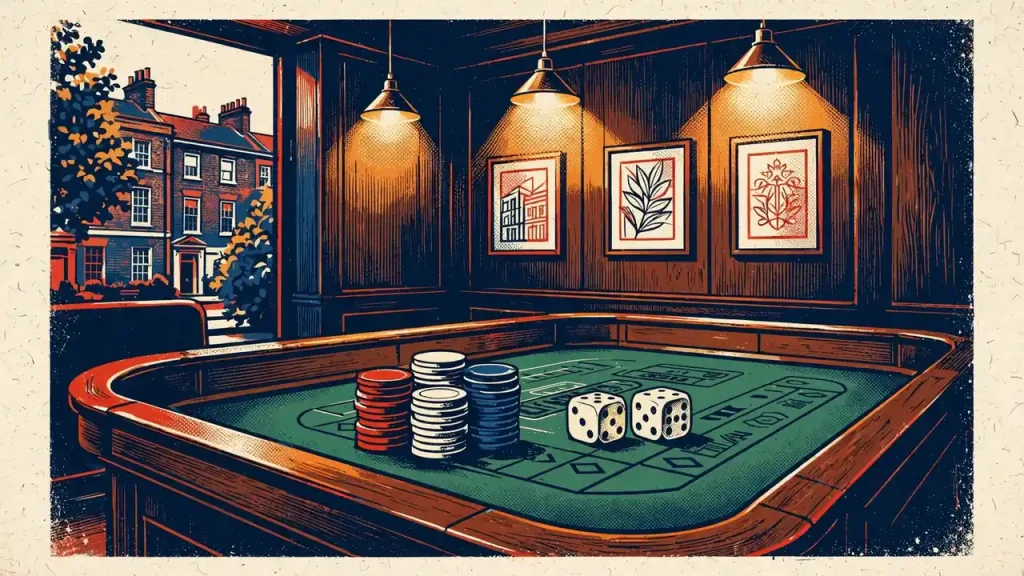
The guide separates dice-based bets from slot themes and explains how stakes, outcomes and casino terms shape the experience.
What casino dice means in practice
A casino dice game is, at its foundation, a wager on an outcome. Cash or chips are committed to a possible result, and the result determines whether the stake produces a return or is lost. The visible object may be a die, several dice, or a representation of a roll, but the commercial arrangement is the same: money is placed against uncertainty.
That distinction matters because the word “dice” can make the activity sound more like a casual game than gambling. In a casino, the roll is not merely a test of skill or a way to pass time. It is the event around which a financial stake is organised. The player selects, or accepts, a possible outcome or combination of outcomes and puts money behind it. The casino provides the game and sets the terms under which those outcomes are valued.
I have seen people focus on the roll itself and overlook the wager attached to it. That is where the real mechanics sit. A roll has no financial meaning until a stake is connected to a result. Once money or chips are involved, every round has two linked parts: the uncertain event and the settlement of the bet. One side of the settlement may produce a short-term gain for the player; another may leave the stake lost. The individual result can go either way, but the overall structure is not balanced in the player’s favour.
Online Bingo UK: Rooms, Slots and Real-Money Play
The wager comes before the excitement
Casino games involve possible random outcomes or combinations of outcomes. In a dice setting, this means the stake is associated with what may happen when the game produces its result. The outcome might be treated as a single possibility or as part of a group of possibilities, depending on the rules of the particular game. The essential point remains unchanged: the player is not buying an object or service. The player is risking money on uncertainty.
That is why a winning round should not be read as proof that the game is favourable. A short-term gain is one result within a sequence of separate wagers. It may feel decisive at the table or on the screen, especially when a result arrives quickly, but it does not alter the underlying arrangement. The casino has not surrendered its built-in advantage because one player has won one bet.
Chicken Road Game in UK Casinos: Format and Context
The same applies in reverse. A lost wager does not demonstrate that the next outcome must be a win. Each round remains a separate opportunity for a random result, with the casino’s long-term advantage still built into the game. This is the point at which intuition tends to mislead. People naturally look for a pattern between recent results, while the business model is based on the cumulative effect of many wagers.
Short-term results can obscure the structure
Casino games typically give the casino a predictable advantage over the long term while still allowing players to make short-term gains. Both parts of that statement are important. The prospect of winning is genuine at the level of an individual result, otherwise there would be no wager to make. But the possibility of a short-term win should not be confused with a favourable expectation across continued play.
In practical terms, the casino does not need to win every round. It does not need every player to lose every bet. Its advantage is expressed over the longer run, through the way outcomes and settlements are arranged across the game. Some players may finish a session ahead. Others may lose quickly. Neither experience changes the predictable advantage held by the operator when the game is considered as a whole.
This is also why a list of recent wins tells little about the quality of the underlying wager. A player can win repeatedly for a period and still be participating in a game designed to favour the casino over time. Conversely, an early loss does not mean that a later result is owed. There is no debt between rounds.
No “due” result.
What the casino is selling
The casino is not selling certainty. It is offering participation in a process where the outcome is uncertain but the long-term commercial position is more predictable. The player supplies the stake and accepts the possibility of a gain or loss. The casino supplies the game and retains the structural advantage.
The casino provides the game and sets the terms under which outcomes are valued, maintaining a structural advantage over the long term.
That advantage is not the same thing as a guarantee of immediate profit. It is a feature of the wagering model, not a promise about what will happen in one session. A casino can pay out short-term winnings and still operate from a position that favours it over continued play. In fact, the possibility of those winnings is part of what makes the wager attractive.
From behind the counter, this was the distinction I found most useful: the result of a round belongs to the short term; the advantage belongs to the structure. Confusing those two levels produces most of the bad reasoning around dice gambling. A successful roll may create a profit at that moment, but it does not turn the game into an even contest. A losing roll may feel unlucky, but it does not establish that the next one must compensate for it.
The practical meaning of casino dice is therefore straightforward. Money or chips are placed on possible random outcomes or combinations of outcomes. The player may gain in the short term, but the casino generally holds a predictable long-term advantage. The roll supplies the uncertainty. The wagering model supplies the business logic.
Online play changes the setting, not the underlying wager
An online dice casino is, at the most basic level, a digital setting for a casino game. The physical surroundings disappear: there is no gaming table in front of the player, no chips passed across a surface and no croupier visibly handling equipment. What remains is the wager itself. Money is committed to an outcome, and the result determines whether that stake produces a return.
Mines Casino Game UK: Demo, Randomness and Real Play
That distinction matters because “online” is often used as though it describes a different kind of gambling. It does not, by itself. It describes how the game is delivered. The underlying arrangement is still a casino game, with a stake attached to a possible result. The screen changes the route into the game, not the fact that the player is placing money on an uncertain outcome.
What the online format actually adds
The online format turns the casino into software accessed through a digital platform. A dice game online casino page may show a betting panel, an area for the result and controls for starting a round. Those visible elements are the operating surface. They allow the game to be played without a physical venue, but they do not transform the wager into something outside the casino category.
From inside the industry, I found that the presentation could make a simple transaction look more elaborate than it was. Animated graphics, sound and changing displays create a sense of activity around the result. That activity belongs to the interface. It should not be confused with an additional layer of certainty or skill. The central event is still the determination of an outcome after a stake has been placed.
Casino games can be offered through online casinos where the law permits that form of gambling. In the United Kingdom, lawful online gambling sits within the licensed and regulated market. This is not a decorative qualification. Whether a game may be offered online depends on the legal position of the operator and the market it is serving.
How random-number games work online
Some online casino dice games are random-number games. In that format, selected random numbers are generated by a computer or by other gaming equipment. The player sees the result through the platform, while the number-generation process takes place within the relevant technical system.
Digital dice generation
In an online format, a random-number game uses a computer or gaming equipment to generate a selected number. The visual effect of a roll is a representation of the result rather than proof of a physical die being thrown.
That description is deliberately narrower than saying that a screen “rolls” a die. Digital graphics may represent a roll, but the important point is the source of the selected number: computer or gaming equipment. The visual effect is a representation of the result rather than proof that a physical die has been thrown somewhere outside view.
This also explains why an online dice casino may feel immediate even though there is no visible table action. The platform presents the result once the system has generated the selected random number. The interface may make the event resemble a physical roll, but the online format can use electronic generation rather than a person physically casting dice.
The distinction is useful when reading descriptions of online casino dice games. Words such as “roll”, “throw” or “table” may describe the way the game looks or is presented. They do not necessarily identify the equipment producing the result. A random-number game remains defined by its generated outcome, not by the animation chosen to display it.
Digital access does not remove the casino structure
The phrase “play casino dice online” can suggest that the internet has separated the game from the normal casino environment. In practice, the setting has simply moved. The operator provides the digital access point, the game interface displays the available action, and the random-number system produces the selected result where that is how the game is designed.
That structure is also why “free online casino dice games” needs careful interpretation. “Free” describes the absence of a cash stake in that particular mode, not a different random process or a separate type of casino. A demonstration or no-stake version can reproduce the appearance of an online game, while real-money play involves an actual wager. The two should not be treated as interchangeable.
JetX Casino Game in the UK: Format and Play
I have seen the interface do most of the persuasive work. A clean layout makes the transition from viewing to staking feel minor; a prominent control makes the next round appear like the natural continuation of the last one. Yet the important boundary is the moment money is committed. Once that happens, the online setting is carrying a casino wager, however polished the presentation may be.
The practical reading is straightforward. An online dice casino is not a physical casino compressed into a screen, nor is it automatically a separate form of game. It is an online delivery method for casino gambling. Where permitted by law, the platform can present the game digitally, and a random-number version can use numbers generated by a computer or other gaming equipment.
Same wager, different room.
Casino games range from machines to dealer-run tables
Casino terminology becomes easier to understand once the equipment and the way the game is managed are separated. A machine, a table and a card-based format may all sit under the casino-games label, but they create very different playing settings. The word “casino” does not itself indicate that a dealer is present, that other players are involved, or that a physical table is being used.
From behind the counter, this distinction mattered because customers often described a game by its theme rather than its operating format. A dice image, a card symbol or a table-style layout could appear in several parts of a casino. The useful question was not what the artwork suggested, but whether the game was a machine operated by one player or a table game conducted by casino staff.
Gambling Machines
Designed for one player at a time. The machine supplies the interface and handles the sequence of play without a dealer.
Table Games
Operated by a croupier or dealer. Players compete against the casino rather than against one another.
Machines: a single-player format
Gambling machines are generally designed for one player at a time. The player interacts with the machine, selects the available stake or play option and receives the resulting outcome through the equipment. Casino employees do not normally need to operate each individual play.
That makes machines fundamentally different from a live table environment. There is no dealer managing the action from one round to the next, and the activity does not depend on a group of players sitting around the same surface. The machine supplies the playing interface and handles the sequence of play.
This is where searches for dice-themed machine games can become misleading. A game may display dice, use dice imagery or describe its feature in terms of rolls, while still belonging to the machine category. The presence of dice on the screen does not turn it into a dice table game. It remains a gambling machine in how it is played.
I have seen this confusion arise when a visual theme is treated as a description of the underlying format. That is how a machine gets mentally grouped with casino games played with dice at a physical table, even though the two experiences are organised differently.
Table games: the casino is the opposing side
Table games operate through a different arrangement. Players compete against the casino rather than against one another, and the game is usually conducted by a croupier or dealer. The staff member manages the table activity while players place their stakes within the format offered.
This applies to the general category that includes casino table games with dice. The table, the dealer and the casino-side contest are the important characteristics here. The presence of other people at the same table does not normally mean that those players are competing directly with each other. They are participating alongside one another while the casino remains the opposing side.
Crash Casino Games in the UK: How to Assess Them
That point is worth keeping separate from the social appearance of the table. A crowded layout can look like a contest between customers, but the structure is different from poker, where players do not compete against the house in the same way and the casino generally earns money through a rake. Table games built around the casino-versus-player arrangement should therefore be understood on their own terms.
The phrase “dice table game” describes the setting more accurately than a dice symbol on a screen. It points towards a dealer-run table format, rather than simply any casino game involving dice-like imagery. Without that distinction, a search for dice casino games can bring together machine play and table play as though they were interchangeable.
Hi-lo is neither a dice table nor a machine category
Hi-lo provides another useful boundary. It is a card-prediction game in which players forecast whether the next card will be high, low or the same. Its defining material is the next card, not dice, and its basic idea is prediction rather than a dice-table presentation.
That does not make hi-lo a machine by definition. The category depends on how the game is offered: a machine format has one-player operation and normally needs no employee involvement, while a table format is usually conducted by a dealer. The card subject and the operating format are separate classifications.
The same method helps with descriptions such as “casino games that use dice” or “dice games at the casino”. First identify whether the game is a machine or a dealer-run table. Then consider the actual game feature. A themed machine should not be treated as a table merely because its screen shows dice; a dealer-run table should not be treated as a machine merely because the player makes an individual wager.
Category Priority
In gambling, the product category and its operating format are more important than the visual theme.
In practice, the category comes first. The artwork comes second.
Bonus terms: the numbers behind the offer
A bonus headline is only the visible part of an offer. The working terms sit underneath it: how much must be deposited, which games count, how winnings are treated and how long the promotion remains available. That distinction matters when comparing offers associated with dice casino sites, UK casino sites with dice games or a casino game with dice. The advertised reward is not the same thing as withdrawable cash.
Wagering requirements
The key calculation is the wagering requirement attached to bonus funds. A requirement of 10x means that the bonus amount must be staked ten times before the relevant withdrawal condition is met. A £20 bonus at 10x therefore produces £200 in required stakes. This is a calculation of turnover, not a promise that the balance will remain intact while the requirement is completed.
A specialist review reports that, from 19 January 2026, gambling incentives cannot attach a requirement above 10x the bonus funds. That is best read as a ceiling on the promotion’s stated multiplier, not as evidence that every offer is equally useful. A lower multiplier may still be paired with game restrictions, a short validity period or a maximum amount that can be withdrawn.
The wording also matters when the offer is connected with dice slots, dice slot games or other casino products. A bonus may specify that only selected games contribute to the requirement, or that some games contribute at a reduced rate. The headline can remain unchanged while the practical route to completion becomes narrower.
Aviator Casino Game UK: Licensing and Play Guide
Separate gambling products
A single incentive cannot require activity across different gambling product types, such as casino play and betting. A specialist review describes this restriction as applying to mixed-product promotions. In practical terms, a casino reward should not be unlocked by adding a betting condition to the same offer.
That makes the product scope worth reading before any deposit. Terms referring to casino play, table games, machines or casino slot dice games are not interchangeable with betting conditions. The name used in an advert may be broad; the qualifying activity is defined in the full promotion rules.
Free-spin winnings
Free spins are another area where the headline can conceal a financial limit. A specialist review reports that many casinos place a cap on winnings generated by free spins. If the spins produce more than that permitted amount, the player may retain only the stated maximum under the promotion.
The cap applies to the winnings, not necessarily to the value of the spins themselves. That distinction is relevant to searches for casino dice slots, slots dice games and casino slot dice games: a dice theme does not remove the promotional condition. The rules may also state which game receives the spins and whether any resulting balance carries its own wagering requirement.
Deposit stages
Welcome packages are often divided into stages rather than delivered in one transaction. A specialist review reports that a minimum deposit threshold can apply separately to each stage, with figures commonly described as modest and ranging from £10 to £20. Each threshold is a condition for that particular part of the package, not a general guarantee that one deposit activates everything.
Wagering Requirements
Step 1: Identify the bonus
Determine the initial bonus amount, for example, £20.
Step 2: Check the multiplier
Locate the wagering requirement, such as a 10x multiplier.
Step 3: Calculate the turnover
Multiply the bonus by the requirement (£20 × 10) to find that £200 in stakes is required.
This is where promotional arithmetic becomes operational. A first deposit may qualify for one reward, while a later qualifying deposit is needed for another. A trusted dice casino claim therefore says little on its own; the useful information is the deposit required, the eligible product, the wagering multiplier and the treatment of any capped winnings.
Read the condition, not the slogan.
Dice-roll slots are still slot machines
A dice image, a roll animation or a title built around throwing dice does not, by itself, turn a machine into a table game. The useful classification is the equipment and the way it is used. If the product is presented as a gambling machine, it belongs to the machine category even when its visual language borrows from casino dice.
That distinction matters because the wording around these products can suggest more than it establishes. “Dice roll” may describe the appearance, the theme or the on-screen event. It does not, on its own, establish that the product follows the rules of a recognised dice table game. Nor does a dice graphic establish how a result is produced, what choices are available, or whether the product resembles craps.
I have seen this confusion arise when a familiar table-game expression is placed beside the word “slot”. The two labels pull in different directions. A slot points to a gambling machine; a dice reference may simply supply the subject matter. Treating the second label as proof of table-game rules is how a basic classification error begins.
The practical difference
Gambling machines are generally designed for one person at a time. They do not require a casino employee to conduct each play. That separates the format from a dealer-run table, where a croupier or dealer is normally part of the operation. A machine with dice-themed artwork therefore remains a self-contained machine experience, rather than becoming a live dice table because the screen shows a roll.
This is also why a request for a “dice-roll slot demo” needs careful interpretation. A demonstration mode, where offered, would relate to the machine presentation rather than confirm the rules of casino dice. The same applies to searches for free play with rolling-dice imagery: the phrase identifies an expected way to view or use a product, not evidence of a particular table-game structure.
Live Dream Catcher Casino UK: What to Check
The label “dice and roll” is equally broad. It may be a decorative theme attached to a machine, while “rolling dice” may describe an animation used during play. Neither phrase is enough to identify the product’s mechanics. The name carries less information than the category.
Do not confuse the categories
Questions about how to play casino dice, dice at a casino or craps at a casino belong to the table-game side of the subject. A dice-themed slot does not automatically answer them. The machine format can borrow the vocabulary of dice without supplying the same setting, decisions or procedure.
My working rule is simple: classify the product before interpreting its theme. If one person operates it and no casino employee is needed to run each play, the description is pointing towards a gambling machine. The dice styling comes second.
Theme is not structure.
What “best” can mean when comparing a dice casino
“Best” is a slippery label in casino advertising. From the inside, it rarely means that one operator can change the mathematics of a dice game. It more often points to the surrounding conditions: how clearly the wager is presented, what account controls are available, and whether the platform makes its terms easy to inspect.
The first comparison is the game itself. Casino games typically give the house a predictable long-term advantage, even though individual players can experience short-term gains. That distinction matters when assessing a dice casino, a BTC casino dice offer, or any other real-money format. A winning session does not prove that the underlying game is favourable, and a losing session does not by itself identify a technical fault.
Separate the game from the platform
I have seen “best” used as if it described a special class of dice game. It does not. It may describe the platform around the game rather than the probabilities built into the wager. The casino dice game rules should therefore be read separately from the site’s presentation, account settings and promotional wording.
Platform Check
- Check if game stake and outcome information is displayed clearly
- Confirm if rules are explained before committing money
- Verify availability of deposit limits at account level
- Ensure session timers are available to interrupt play
- Check for direct self-exclusion controls
The same discipline helps with related searches for a dice slot, dice slot game or slot dice game. A slot is still a gambling machine, while a dice wager may be presented as a different casino format. Treating every dice image or label as evidence of better value is how comparisons become advertising copy.
Practical criteria that can be checked
A useful comparison can concentrate on conditions that exist independently of a headline such as “best dice casino UK” or “best dice casino sites UK”:
- whether the game’s stake and outcome information is displayed clearly;
- whether the casino explains its rules before money is committed;
- whether deposit limits are available at account level;
- whether session timers can be used to interrupt extended play;
- whether self-exclusion is offered as a direct control rather than hidden in support pages;
- whether bonus wording is presented separately from the basic game conditions.
These points do not remove the house advantage. They make the operating environment easier to understand and easier to control. That is the difference between assessing a platform and praising it.
Searches for “best bitcoin dice casino” or “BTC dice casino” add a payment preference, not a new standard of game quality. A platform accepting a particular currency is not automatically better at explaining casino dice rules, managing limits or acknowledging the long-term mathematical position of the house.
The sensible result is a shortlist of verifiable conditions, not a ranking manufactured from promotional language. No magic label.
Offshore casinos, crypto and the UK licensing divide
The UK online casino market in 2026 is often described as having two parallel parts: the UKGC-regulated space and a separate group of offshore platforms outside that system. That description comes from a specialist review rather than a permanent definition of the market, so it is better treated as a snapshot than as a fixed rule.
The legal distinction itself is clearer. A remote operator selling gambling to customers in Great Britain must hold the relevant UKGC licence. An offshore casino accepting players from the UK operates outside the UKGC regulatory framework and does not hold a UKGC licence. Its physical location and its customer base are therefore different matters: being available to UK players does not make the platform a UK-licensed casino.
This is where labels such as “top dice casino sites UK” can become misleading. A platform may be easy for a UK resident to access while belonging to a different regulatory category from a locally licensed operator. The word “top” says nothing about the licence behind the service. I have always separated those two questions because availability is not the same as UKGC status.
Regulatory Status
An offshore casino operating outside the UKGC framework does not hold a UKGC licence, regardless of its availability to UK players.
Non-traditional gaming platforms may instead operate under licences issued in Curaçao, Malta or Gibraltar. Such a licence identifies the jurisdiction responsible for the platform’s authorisation; it does not convert the operator into a UKGC licensee. The distinction matters when a site is presented as a crypto casino for dice play or as a place to search for a dice game using cryptocurrency. Crypto acceptance is a payment feature, not proof of British licensing.
The same applies to searches framed around a casino dice game or a dice-focused casino using digital coins. The payment method and the gambling authorisation are separate attributes. A platform can advertise cryptocurrency support while remaining outside the UKGC space. Conversely, the presence of a familiar casino format does not establish anything about the operator’s regulatory position.
In the regulated British market, real-money online gambling is legal only through licensed and regulated sites, and participation is for people aged 18 and over. Offshore platforms sit outside that local system even when they accept UK players. The practical label may be “non GamStop sites”, but the regulatory description is more precise: offshore, outside UKGC oversight, and licensed elsewhere if a foreign licence is held.
Different framework.
Random outcomes and the house edge in casino dice
A casino dice game is built around outcomes that cannot be known in advance. In a digital version, the relevant numbers are selected by a random-number system generated by a computer or other gaming equipment. The result may be displayed as a virtual roll, a number, or another game event, but the underlying point is the same: the outcome is produced by the game system rather than chosen to match a player’s preference.
Online Casino Tournaments UK: Rules, Prizes and Terms
That randomness is often mistaken for an even contest. It is not. Randomness describes how the result is selected; it does not mean that every betting position has identical value, or that the casino and the player have equal prospects over time. The game can produce an unpredictable result on any individual round while still being designed to give the casino a predictable long-term advantage.
That distinction matters when assessing casino dice in the UK. A short run can favour the player, and a single result may create a win. Across many rounds, however, the mathematical structure of casino games generally leaves the operator with the advantage. The outcome is uncertain; the direction of the long-term expectation is not.
I have seen the two ideas blurred in casino copy. “Random” sounds like a promise of neutrality, while “fair” can be read as a promise that the chances are balanced. Neither word removes the house edge. A game may use randomly generated numbers and still be a casino game arranged to retain an advantage for the house.
The same applies when the format is described as a dice casino game, a dice game in a casino, or a digital casino dice table. Changing the presentation does not change the basic relationship between random results and the operator’s statistical position. A player can gain in the short term. The casino’s advantage is measured over the longer run.
Random result. Fixed edge.
Top online casinos in the UK
- JetsetspinsBonus: 200% Bonus + 100 Free Spins + Free Royal Wheel · Payout speed: 1-3 business days
- x3betBonus: Welcome Pack 100% Up to £1.000 + 200 Free Spins · Payout speed: 1-3 business days
- SlotoSportBonus: 500% up to £ 10 200+ 777 FS · Payout speed: 1-3 business days
- NightLuckBonus: Welcome Pack + 805% Up To 6400€ + 280 FS · Payout speed: 1-3 business days
- Revery PlayBonus: 100% up to€1,000+ 100 FS · Payout speed: 1-3 business days
- BeOnBetBonus: 100% up to €500 + 100 FS · Payout speed: 1-3 business days
- NightWinBonus: £900 + 400 free spins · Payout speed: 1-3 business days
- WinBeastBonus: €5000 + 500 FS + €650 Freebet · Payout speed: 1-3 business days
Bitcoin deposits and withdrawals: what the facts support
Bitcoin can appear among the payment methods offered by alternative online casino platforms. The same payment pages may also list Ethereum and Litecoin, alongside conventional cards and e-wallets. That makes cryptocurrency relevant to searches for a Bitcoin dice casino, but the payment method does not define the casino game itself. It concerns how funds enter and leave the account.
Does Bitcoin change the game?
No, Bitcoin is a payment method for deposits and withdrawals and does not define the casino game itself.
How fast are transactions?
Processing speeds vary; while some platforms offer rapid deposits, withdrawal times depend on the specific method and verification processes.
The wording on a cashier page matters. “Bitcoin accepted” can refer to deposits, withdrawals, or both, so those functions should be treated separately. A platform may display several cryptocurrencies while also retaining card and e-wallet routes. The available options are therefore a feature of the individual operator rather than a universal property of every casino offering dice games.
I have always treated the cashier as a separate part of the product. A casino can present a dice table, a Sic Bo-style game or other casino content, yet the practical payment experience depends on the account’s available funding channels. The name of the game does not establish whether Bitcoin is supported.
A specialist review reports that alternative platforms may accept Bitcoin, Ethereum and Litecoin together with cards and e-wallets. That is a description of possible payment provision, not a promise that every platform offers every method. The same distinction applies to a Bitcoin casino dice search: the word “Bitcoin” identifies a payment preference, while “dice” identifies the intended casino content.
Processing speed is another separate issue. Many platforms are described as providing instant deposits, with withdrawals completed within hours rather than days. “Instant” generally describes the deposit stage; it should not automatically be read as a guarantee that a withdrawal will reach a bank account or wallet immediately. Verification and the chosen payment route remain part of the process.
A specialist review also reports deposits and withdrawals being completed within hours rather than days on many platforms. The sensible reading is narrow: some operators promote rapid processing, while the actual route depends on the method displayed in the cashier. Cards, e-wallets and cryptocurrencies can therefore sit beside one another without having identical handling times.
For a dice casino bonus, payment choice remains a separate consideration. A promotional condition does not turn Bitcoin into a game feature, and a cryptocurrency option does not by itself establish anything about the casino’s dice offering.
Crazy Time Live Casino Game Show in the UK
Dice-themed slots and the limits of the available evidence
Dice-themed slot searches sit at the boundary between two familiar casino ideas. The dice imagery suggests rolling, throwing or combining dice, while the word “slot” places the product in the gambling-machine category. That distinction matters because a machine is not the same thing as a dealer-run table game, even when both use similar visual language.
A dice-themed machine is generally designed for one person at a time. It does not normally require a casino employee to operate each round, settle each result or manage the player’s participation. The machine format therefore separates it from a casino game where a croupier physically handles equipment and conducts play.
That basic classification is the reliable starting point for phrases such as dice-themed slots, free dice slots and roll-the-dice slot games. The wording may suggest a particular action, but it does not by itself establish how the product works. A reference to three dice does not, on its own, prove that three physical dice are used, nor does a phrase about rolling identify the result-generation method. Those details belong to the individual machine’s published rules.
The same applies to broad descriptions such as a casino game in which dice are rolled or thrown. They can point towards a dice presentation, but they do not decide whether the product is a gambling machine or a table format. The surrounding label does that work: “slot” indicates the machine category, whereas a dealer-run dice table belongs to a different part of casino gaming.
Free-play wording also needs careful reading. It may describe the way a product is accessed rather than establish a separate type of game. It says nothing by itself about the machine’s operation or the involvement of casino staff.
So the practical dividing line is simple: dice imagery describes the theme, while slot terminology identifies the machine format. Such machines are generally played by a single person, without casino employee involvement. Beyond that classification, labels such as “roll”, “throw” or “three dice” should not be treated as complete rules. The title is only the sign on the cabinet.