
3-Reel Slots in the UK: Games, Odds and Play
 Available in GB
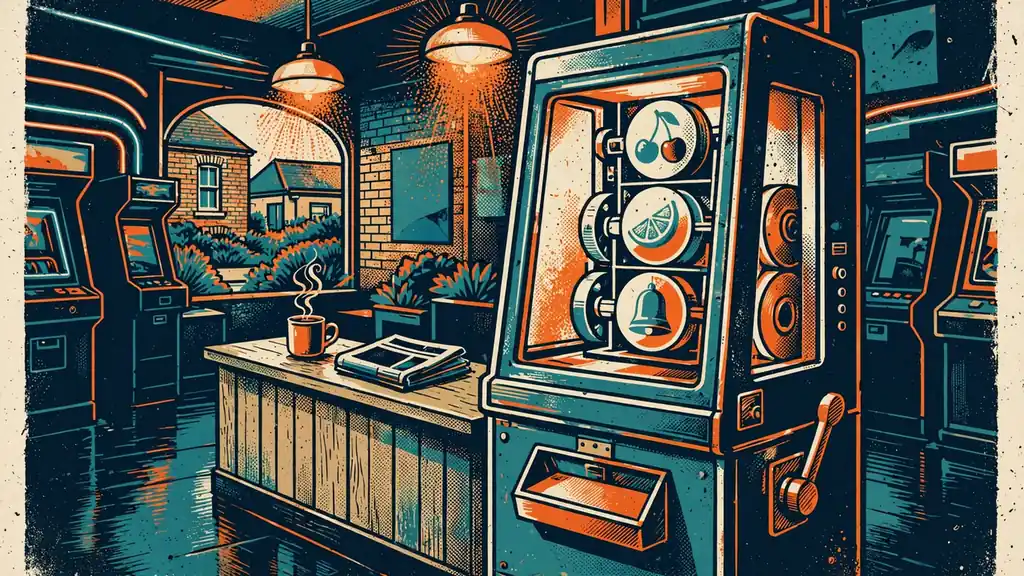
Three-reel slots keep the outcome focused on three vertical columns, with a simpler layout than feature-heavy video games.
What a Three-Reel Slot Actually Offers
A three-reel slot is the compact end of the reel-game format: three vertical columns, symbols arranged on each column, and a result created when the reels stop. The presentation is immediately recognisable because it is close to the old fruit-machine layout. There is less visual material competing for attention, fewer moving parts on screen and a short sequence between starting the spin and seeing the outcome.
That simplicity is the main reason three-reel slots remain relevant. A five-reel game can look like a large entertainment product, with several rows, extensive menus, bonus features and a wide field of symbols. A three-reel game makes a narrower promise. It puts the reel result at the centre rather than surrounding it with layers of presentation.
I have always found that distinction useful when assessing the phrase “best 3 reel slots”. It does not automatically mean the most elaborate games, the largest feature sets or the most animated interfaces. For this format, the attraction is often the opposite: a direct, familiar mechanism that does not need much explanation.
A smaller layout, not a smaller version of everything
The number of reels affects how the game is understood, but it does not by itself describe every rule. A three-reel slot may use its own symbol arrangement, winning conditions and presentation. The label identifies the reel count; it does not establish a universal payline design or a particular set of outcomes.
That matters because “3-reel slots” are sometimes treated as though they all follow one old mechanical template. In practice, the format can be presented in different ways. Some versions lean heavily into fruit-machine imagery. Others use a cleaner online interface while retaining the short reel layout. A title can look modern without becoming a five-reel game, and a title can look classic without sharing every rule associated with older machines.
The compact display also changes how the result feels. On a larger slot, the eye may move across several reels and rows, checking a broad arrangement of symbols. With three reels, the stopping pattern is easier to take in at once. That can make the game feel more immediate, although it does not make the outcome more predictable.
Casino Games: Slots, Live Tables and Online Picks
This is an important boundary. A small screen and a short spin sequence do not turn a slot into a simpler mathematical proposition. They describe the interface and the format. They do not indicate that a particular result is due, that one symbol is more likely to appear next, or that the game offers better value.
Three reels compared with five
The clearest contrast is with a five-reel slot. A five-reel game can have a bet applied across all five reels, creating a broader field for combinations and a different way of presenting the wager. That wider coverage is one of the practical distinctions between the two formats.
A three-reel game does not need to imitate that structure to be complete. Its appeal lies in keeping the visual route from spin to result short. The player sees a more restricted reel arrangement, while the five-reel format can spread the action across more columns. Neither layout is automatically superior; they serve different expectations.
In commercial descriptions, five-reel games are often associated with extensive features because the larger layout provides room for more symbols, additional rows and feature screens. Those associations should not be confused with a rule that every five-reel title must contain the same elements. Equally, a three-reel title should not be assumed to lack every possible extra feature merely because it uses a compact layout.
The format is a starting point, not a complete specification.
Why the classic appearance still matters
Many online 3 reel slots borrow the visual language of traditional fruit machines: bright symbols, simple reel bands and a cabinet-inspired interface. That style is familiar even when the game is accessed through a browser rather than a physical machine. The visual shorthand tells the player what kind of experience to expect: a reel-led game rather than a large video presentation built around a theme.
The word “classic” is therefore best read as a description of presentation and heritage, not as a guarantee about rules or returns. Classic 3 reel slots can differ from one another in their symbols, winning arrangements and other design choices. The common thread is the recognisable three-column format and the restrained presentation around it.
The term “classic” describes the visual heritage and presentation style, rather than acting as a guarantee of specific rules or mathematical outcomes.
I have seen the word used as a sales shortcut. It sounds reassuring because it suggests something established and uncomplicated. What it really communicates is usually narrower: the game is drawing on the appearance and conventions of older reel machines. The label does not remove the need to examine the individual game information.
What the format does not tell anyone
Searching for 3 reel slots UK or 3 reel slots online can produce a mixture of physical-machine imagery, browser games and casino listings. The shared phrase describes a format, not a quality ranking. It does not identify the strongest game, the most suitable title or a guaranteed outcome.
Nor does reel count reveal the full odds, the available winning lines or the way a particular game calculates its result. Those details belong to the individual title. A three-reel display may look straightforward, but visual simplicity is not the same as complete transparency about every rule.
The useful distinction is between what can be seen and what must be checked in the game information. Three reels establish the shape of the experience: compact, recognisable and focused on the stop of the reels. They do not, on their own, establish the payout structure or make one title the best 3 reel slot.
That is the format’s strength and its limit. Less clutter, not fewer conditions.
Three-Reel Games and the Machines Behind Them
The expressions “slot game” and “slot machine” describe closely related things, but they are not always used in exactly the same way. A slot game is the playable title: its reels, symbols, winning arrangements, sounds, animations and any rules attached to the format. A slot machine is the presentation of that game as a piece of gambling equipment. In a physical venue, that equipment is a cabinet with buttons, a display and mechanical or simulated reels. Online, the machine is represented by software on a screen.
Best RTP Casino Slots in the UK: What RTP Means
That distinction matters because the online version does not need to resemble a full cabinet to remain recognisably a slot machine. A browser window, mobile display or desktop game can show the same basic reel arrangement without reproducing every physical part of the old machine. When people refer to three-reel slot machines online, they are normally talking about digital games built around three visible reel columns, rather than claiming that a metal cabinet has somehow been delivered to the screen.
I have always found the word “machine” useful as a description of the format, not the hardware. It points to the familiar sequence: symbols are displayed in reel columns, a play is started, and the result is shown through the changing positions of those symbols. The game may look modern or deliberately old-fashioned, but the machine label remains attached because the central interaction comes from the reel machine tradition.
What makes the online version a three-reel game?
A three-reel game is organised around three reels as its principal visual structure. The display may include a paytable, controls, sound settings and decorative artwork, yet those additions do not change the basic identity of the title. The reels remain the part that defines the format.
This is also why “three-reel slot game” and “three-reel slot machine” can appear as interchangeable descriptions in ordinary casino language. One phrase puts the emphasis on the software title; the other highlights the machine-style experience. Neither necessarily means that the game is physically mechanical. Online, both can refer to a digital recreation of reel-based play.
Three-reel vs Five-reel
A three-reel game focuses on a compact layout with a short sequence from spin to result. In contrast, a five-reel game provides a broader field for combinations, often including more rows, symbols, and extensive feature menus.
The comparison with a five-reel game shows where the machine description becomes more than a visual label. A five-reel title may allow a single wager to cover all five reel columns. That arrangement gives the game a broader field for its possible winning patterns. A three-reel title presents a more compact structure, so its appearance and rule display need to be read on their own terms rather than assumed to work like a five-reel game.
The reels are the framework. The rules decide the rest.
Free-play versions use the same machine language
A free-play title can still be called a slot game or a slot machine even though it is being used for demonstration rather than wagering. The software presents the reels, symbols and controls in the same general manner; what changes is the status of the credits shown during play. They are part of the simulation, not money held in an online account, and the result remains within the free-play environment.
This is why descriptions such as “free three-reel games” do not refer to a separate species of machine. They identify three-reel titles made available in a non-wagering mode. The visual arrangement may be familiar, and the controls may respond in much the same way, but the display is being used to show how the game behaves rather than to represent a cash transaction.
The distinction is important when reading labels. “Online” describes where the game is accessed. “Three-reel” describes its central layout. “Slot machine” describes the machine-style format. “Free play” describes the mode in which that format is being used. These terms can sit together without contradicting one another.
High-RTP slots in the UK: how to compare returns
Features belong to the individual title
General format language should not be mistaken for a complete rulebook. Two three-reel games may share the same compact appearance while presenting different symbols, artwork, controls or winning arrangements. The phrase “three-reel features” therefore works as a broad description of what the title displays and how it is arranged, not as a promise that every game includes identical functions.
Some online versions are designed to evoke a traditional fruit-machine cabinet; others use cleaner graphics or a more contemporary interface. That styling changes the presentation, not the underlying reason the title is grouped with three-reel games. The machine is the digital frame, while the game is the particular set of reels, symbols and rules inside it. Keep those two meanings separate.
Top online casinos in the UK
- JetsetspinsBonus: 200% Bonus + 100 Free Spins + Free Royal Wheel · Payout speed: 1-3 business days
- x3betBonus: Welcome Pack 100% Up to £1.000 + 200 Free Spins · Payout speed: 1-3 business days
- SlotoSportBonus: 500% up to £ 10 200+ 777 FS · Payout speed: 1-3 business days
- NightLuckBonus: Welcome Pack + 805% Up To 6400€ + 280 FS · Payout speed: 1-3 business days
- Revery PlayBonus: 100% up to€1,000+ 100 FS · Payout speed: 1-3 business days
- BeOnBetBonus: 100% up to €500 + 100 FS · Payout speed: 1-3 business days
- NightWinBonus: £900 + 400 free spins · Payout speed: 1-3 business days
- WinBeastBonus: €5000 + 500 FS + €650 Freebet · Payout speed: 1-3 business days
Real-Money Play: Stakes, Limits and the House Edge
A three-reel game can look identical whether it is running in demonstration mode or attached to a betting account. The financial arrangement is what changes. In free play, the displayed balance is only a testing balance: spins do not risk personal funds and any apparent win cannot be withdrawn. Real-money play records an actual stake for each game cycle, with winnings governed by the game’s rules and the account’s balance.
That distinction matters because “real money” describes the transaction, not the appearance of the reels. A simple fruit-machine layout can still involve genuine wagering, while a polished online presentation can remain entirely fictional in free mode. I have seen the two treated as interchangeable in promotional copy. They are not. One simulates the experience; the other creates a financial exposure.
Stake Limits
In Great Britain, players aged 18–24 are limited to a £2 maximum stake per cycle, while those aged 25 and over are limited to £5 per cycle.
How the Great Britain stake cap works
For online slots in Great Britain, the permitted stake depends on the customer’s age. Customers aged 25 and over are subject to a maximum of £5 for one game cycle. Customers aged 18 to 24 have a £2 ceiling for the same cycle. A specialist review reports these limits, and the amounts should be checked against the current position before relying on them, since regulatory conditions can change.
The limit applies to the amount staked in the individual cycle, not to how attractive the symbols appear or how many reels the game displays. A three-reel format does not create an exemption, and a smaller-looking game does not automatically mean that the financial exposure is lower than the permitted stake. The relevant unit is the game cycle: the wager is committed, the result is generated, and the next cycle becomes available under the applicable rules.
That also explains why a search for the best real-money three-reel slots can be misleading if “best” is left undefined. It might refer to presentation, simplicity, payouts, or a personal preference for old-style reels. None of those labels removes the stake cap or changes the underlying expectation of the game. A real-money slot remains a wagering product even when its interface is deliberately spare.
The house edge is a long-run calculation
The house edge is the part of the game’s mathematical design that favours the operator over a sufficiently long run of play. It does not mean that every individual spin loses, nor does it predict the order in which wins and losses will appear. A player can experience a winning session in a game with a house advantage. The point is different: across enough sessions, the expected result for the player is negative whenever the game has a positive house edge.
Bonus Buy Slots UK: Features, Offers and Risks
The speed of that loss is not the definition of the edge. A game may return small wins often enough to make the balance decline gradually, while another may produce longer quiet stretches interrupted by larger payments. If the underlying expectation remains positive for the house, both arrangements are mathematically unfavourable over time. Gradual losses are still losses in expectation.
This is where free searches for three-reel games can blur the issue. Someone may play three-reel slots free online, see a balance rise, and assume that the same pattern would translate to wagering. It does not. A simulated result may demonstrate the interface and the rhythm of the game, but it does not create a cash return or prove that real-money play will produce the same sequence. “Free” removes the financial stake; it does not improve the mathematics of the paid version.
“No registration” is another phrase that says little about the expected result. It can describe a demonstration session rather than an account capable of accepting wagers. The important question is whether money is being committed to each cycle. If it is, the game belongs to the real-money category regardless of whether the reels are classic, video-based, downloaded, or played in a browser.
The practical conclusion is narrow but important: stake limits control the size of each permitted wager, while the house edge governs the long-run direction of expectation. They are separate mechanics. A lower stake reduces the amount exposed in a cycle; it does not turn a positive house edge into a player advantage.
Important Distinction
Stake limits control the size of each permitted wager, while the house edge governs the long-run direction of expectation.
Free Online Play Is a Demo, Not a Payout
Free online 3 reel slots are simulations of reel-based casino games. The display may show familiar symbols, a spin button and a balance, but the balance is only part of the demonstration. No deposit is being used, no real stake is placed and no cash withdrawal can follow from a winning spin. The figures on screen are fictional.
That distinction gets blurred by labels such as “free,” “classic” and “high payout”. In a real-money setting, a payout describes an amount returned by the game under its rules. In a free version, any increase in the displayed balance is only simulated credit. It cannot become a bank transfer, a withdrawal or a cash prize. The wording may sound generous; the practical result remains a demo.
What free play actually shows
A free classic 3 reel slot is mainly a way to experience the presentation of an old-fashioned machine. The compact reel window, fruit-style symbols and straightforward spin sequence recreate the appearance associated with traditional pub and arcade machines. The software may also display wins, losses or a running balance so that the session resembles a gambling game.
Those elements do not turn the session into gambling for money. They are interface features. I have seen the word “win” used in demonstrations where the only thing won was a larger number beside the play credits. That is a visual event, not a payable result.
Free online play can still be useful for understanding the basic rhythm of a game. It shows how the reels move, how symbols appear and how the screen records a result. It can also reveal whether the old-fashioned presentation is genuinely simple or merely wrapped around a more elaborate interface. What it cannot establish is that a future cash session will produce the same sequence or outcome.
Live Casino UK: How Online Tables Work
“How to win” has two meanings
The question of how to win on 3 reel slots needs careful wording. In a free version, a win means that the simulated result matches a displayed winning combination. It does not mean that money has been won. The only possible gain is an increase in the fictional balance, and that balance has no value outside the demonstration.
The same applies to claims about a high payout 3 reel slot. A title or promotional description may suggest large winning potential, but free play does not pay anything at all. The claim cannot be tested through a demo balance because there is no cash settlement at the end of the session. A player can observe the game’s presentation, but not collect its advertised return.
This is why a free session should not be treated as evidence of a profitable method. There is no technique that converts demonstration credits into money, and no sequence of favourable spins creates a withdrawal entitlement. The session ends as a sample of the game.
A format comparison, not a money claim
The three-reel layout is often presented as a deliberately reduced alternative to larger video-slot screens. A five-reel slot may allow one bet to cover every reel, creating a broader reel arrangement and a different visual structure. That comparison concerns how the game is laid out, not whether free play pays more or less.
The same principle applies to online casino 3 reel slots and their old-fashioned counterparts. Browser access changes where the demonstration is viewed, while the free-play label changes the status of the balance. Neither creates a cash payout. The reels may look authentic; the money is not.
Free Play Limits
In a free-play or demo mode, any balance increases are simulated credits only; they cannot be withdrawn as cash or used for real-money gambling.
Playing Online for Money: The Licence Comes First
Real-money play begins with the operator, not the reel layout. Whether the game presents as a compact classic machine or a more elaborate online slot, the business offering it must have the right authority to provide gambling to people in the market. A familiar title does not make an unlicensed website legitimate, and a polished interface is not evidence of regulatory approval.
In Great Britain, that authority comes from the UK Gambling Commission. It is the regulator responsible for commercial gambling there and oversees remote gambling offered to consumers in Great Britain. The location of the company’s servers, offices or other essential equipment does not remove that obligation. A business based elsewhere still needs the relevant British authorisation when it supplies remote gambling to this market.
The Commission’s role is broader than approving a casino brand. It regulates gambling activity across the United Kingdom, including online casinos, while its remote-gambling responsibilities cover services directed at consumers in Great Britain. That distinction matters because an operator may describe itself as international, offshore or established in another jurisdiction. Such wording says where the business operates from; it does not establish that the business can lawfully offer real-money slots to British customers.
Online Slots Payout Percentage: What RTP Can Tell You
I have seen the licence treated as a logo in the footer, as though displaying a regulator’s name settled the question. It does not. The relevant point is whether the actual operating business appears on the UK Gambling Commission’s public register with a current operating licence covering the service being offered. The brand name, trading name and legal entity may not be identical, so the check has to connect the website with the licensed business rather than stop at a badge.
The Commission licenses companies through operating licences. It also grants personal licences to individuals whose roles place them within the regulated operation. That two-level structure reflects how online gambling works in practice: the public-facing casino is one part of the arrangement, while named people may hold responsibility for management or key operational functions. A company’s licence and the personal licensing of relevant individuals are separate elements of oversight, not interchangeable labels.
For anyone considering real-money play on three-reel games online, the practical sequence is therefore straightforward:
- identify the legal operator behind the website;
- check that operator against the UK Gambling Commission’s public register;
- confirm that the listed permission relates to remote gambling for the British market;
- treat an unclear, missing or mismatched licence record as a reason not to deposit.
This is not a judgement about whether a particular game is entertaining or whether its presentation resembles an old fruit machine. It is a check on who is permitted to offer the gambling in the first place. Free versions can be displayed on many types of website, but the moment a service accepts wagers and offers gambling to British consumers, the operator’s regulatory status becomes the central question.
The licence comes first. Everything else follows.
Fruit-Machine Paylines, Reel Coverage and Odds
The phrase “fruit machine” brings a particular picture to mind: reels carrying familiar symbols, a compact display, and a winning line judged by what settles in view. That image remains useful when discussing three-reel slots online, but it can also create false assumptions. Reel count, paylines and bet coverage describe different parts of a game. They should not be treated as interchangeable labels.
A three-reel layout tells how many reels are shown in the central game area. It does not, by itself, establish how winning combinations are assessed. A line may be visible across the reels, but the way symbols are read, which positions count, and whether more than one line can be used are matters of the individual game’s rules. The same caution applies to a free three-reel slot machine: removing real money from the experience does not turn a visual layout into a complete explanation of its payline system.
Verification Steps
- Identify the legal operator behind the website
- Check the operator against the UK Gambling Commission’s public register
- Confirm the permission relates to remote gambling for the British market
This is where the old fruit-machine comparison can mislead. Traditional-looking graphics suggest simplicity, yet presentation and mathematics are separate questions. A game may look like a small mechanical machine while operating through a defined set of symbol combinations. Another may use the same broad visual language but arrange its winning logic differently. “Classic” is therefore a description of appearance and style, not proof of a particular line structure.
Reel count is not bet coverage
A five-reel slot offers a useful contrast. Its design can allow one stake to cover positions across all five reels. That is a statement about the reach of the bet through the reel layout, not merely a statement that the game displays five reels. The distinction matters because a player can otherwise assume that adding reels automatically means adding winning lines, or that every visible reel is treated identically in every game.
The same principle applies in reverse to three-reel slot machines online. Three reels do not automatically mean one payline, several paylines, or any particular arrangement of active lines. The number of reels identifies the format; it does not disclose the complete betting map. Promotional wording often compresses these ideas into a phrase such as “more ways to win”. Behind that phrase sits a rule about which reel positions are included in a stake and how matching symbols must align.
I have seen this confusion arise when a familiar fruit-machine image is used as a shortcut for the rules. The picture is easy to recognise, while the paytable and help screen carry the information that actually determines the winning patterns. Those two things should be read separately.
First-Deposit Casino Bonuses in the UK: Terms
What can be said about odds
The expression “three-reel slot odds” sounds precise, but reel count alone cannot supply a reliable answer. Odds depend on the game’s symbol distribution, winning combinations, paytable and other rules. None of those can be inferred simply from the fact that a game has three reels. A visible fruit symbol is not evidence of a particular probability, and a larger-looking payout is not evidence of a particular chance.
Paylines have a similar limitation. The phrase “three-reel slot machine paylines” refers to the routes or combinations recognised by a specific title, not to one universal feature shared by every three-reel game. Some descriptions may use line-based language loosely, especially when explaining a machine-inspired interface. The operative detail remains the game’s own stated arrangement.
So the practical distinction is straightforward: reels describe the display, coverage describes where a bet applies, paylines describe recognised winning routes, and odds describe the likelihood attached to outcomes. One cannot be substituted for another. Compact appearance. Separate mechanics.
No-Download Play and the Difference from Video Slots
A three-reel game can run directly in a browser, without installing software on a computer, tablet or phone. That is what “no download” means in practical terms: the game interface is delivered through the website rather than stored as a separate application. The label describes access, not the quality of the game, its odds or the value of any promotion attached to it.
No-download
A method of accessing games directly through a web browser without the need to install separate software on a device.
I have seen “instant play” used as if it were a product advantage. Usually, it is simply a technical description. A browser-based game may be easier to open, while a downloaded game may use a different delivery method. Neither arrangement, by itself, makes a winning result more likely.
The same distinction matters when a site advertises free three-reel games. Free access means that the displayed balance is not a withdrawable gambling balance. Spins can imitate the appearance of a machine, but the play does not create a cash entitlement. “No deposit” describes the absence of an initial payment in the offer or demo arrangement; it does not turn simulated winnings into money, and it does not guarantee that any promotional value exists.
Three-reel slots versus video slots
The phrase “video slot” generally points to a more screen-led presentation, often with animated scenes, extended bonus features and several layers of visual information. A three-reel game is identified first by its compact reel arrangement. These descriptions overlap: a game can use reel symbols in a digital video presentation, while a visually elaborate game can still be built around spinning reels.
The useful comparison is therefore structural, not aesthetic. A three-reel layout keeps the central action compact. A video slot may devote more of the screen to story elements, animations, feature panels or additional symbols. Those design choices affect how the game is presented, but they do not establish a particular return pattern.
Reel coverage also prevents a misleading comparison. A five-reel slot can accept a bet applied across all five reels. That is a statement about how the wager can cover the layout, not proof that every game with more reels offers better value. A three-reel browser game should not be assumed to use the same coverage simply because both products are called slots.
From the operator’s side, no-download play removes a software-installation step; from the player’s side, it changes the route into the game rather than the underlying mathematics. The important separation is simple: browser access is a delivery format, video presentation is a design format, and reel count describes the game’s visible structure.
Different layers.
A Three-Reel Slot in Context
A three-reel slot is the compact form of a reel-based casino game: three vertical columns of symbols are presented as the central playing area, with the result determined when the reels stop. Its identity comes from that reduced layout. There is less visual real estate than in a larger video-style design, so the format tends to place the reel display at the centre rather than surrounding it with extensive features and secondary screens.
That does not make every game with three reels identical. The symbols, winning arrangements, presentation and payment structure can differ from one title to another. “Three-reel” describes the visible reel format, not a complete set of rules. That distinction matters because the label is often treated as though it automatically explains the game’s mathematics. It does not.
The clearest comparison is with a five-reel slot. A stake on that format may cover all five reels, allowing the bet to be considered across the complete five-reel layout. The comparison is about reel coverage, not a claim that one format is inherently better. A shorter layout simply gives the game a different structure to build around.
Summary
- The three-reel format defines the visual structure and layout, not the mathematical rules.
- A game’s presentation (classic vs video) is separate from its volatility.
- Always verify an operator’s licence on the UK Gambling Commission register before depositing.
In my experience, the useful question is therefore not whether three reels sound more traditional, but what the individual game does with them. The reel count identifies the framework; it does not, by itself, disclose the available winning patterns or the size and frequency of returns. Those details belong to the particular title’s rules and pay information.
A three-reel slot is best understood as a defined format within the wider slot category: compact, recognisable and centred on the reels themselves. The name sets the outline. The individual game fills it in.
Classic Three-Reel Slots and the Meaning of ‘Classic’
“Classic” is mainly a description of presentation. It points towards the familiar reel-game appearance: a compact three-reel layout, recognisable symbols, and a straightforward visual arrangement rather than a screen built around layered features. The label helps place a game in a tradition, but it is not a technical guarantee.
That distinction matters because titles using the word classic do not necessarily share identical rules. One may use a different way of counting winning combinations from another. The symbols may look familiar while the available bets, prize structure, or reel behaviour differ. Calling a game a classic three-reel slot therefore says more about its format and visual language than about its exact mathematical design.
I have seen “classic” used as a reassuring shorthand. What sits behind it is usually less ambitious presentation, not a promise of simpler outcomes or better value. A familiar appearance cannot establish how often combinations occur, what they pay, or how the game handles a winning result. Those details belong to the individual title.
The comparison with a five-reel game shows why the label should not be stretched too far. A five-reel slot may allow one wager to cover every reel in the layout, while a three-reel game presents a more compact arrangement. That is a difference in reel coverage and structure; it does not mean that every game described as classic follows one universal rule set.
“Classic” also need not mean old software. It can be applied to a newer release designed to reproduce the look of traditional fruit-machine play. Nor does the term, by itself, separate a free-play version from another version of the same game. It identifies the style of the reel presentation. The mechanics still need checking title by title.
Style, not specification.
Classic Reels Versus Video Slots: Volatility Is Not a Format
“Classic” and “video” describe presentation and structure; volatility describes how returns tend to arrive. Those labels answer different questions, even when casino copy places them beside each other.
A classic reel game generally presents a compact, familiar machine-style layout, often using symbols associated with traditional fruit machines. A video slot can use animated screens, layered features and a more elaborate visual design. That difference is visible. It does not, by itself, show whether wins will arrive frequently or whether they will be separated by longer losing stretches.
Volatility concerns the distribution of results. Low-volatility slots spread returns across many smaller wins. High-volatility slots tend to pay less often, with larger wins when the relevant combinations occur. Neither description makes a game favourable in mathematical terms; it only explains the pattern in which outcomes may be experienced.
Best High-Volatility Slots in the UK: How They Work
This is where the “classic means safer” assumption goes wrong. A plain reel display is not evidence of low volatility, just as animated graphics are not proof of high volatility. The format may influence the atmosphere and the number of visible features, but it does not replace the game’s underlying probability model.
I have seen presentation do a great deal of selling work. A simple screen can make play feel controlled, while a busy video interface can make every result look significant. That impression is not a volatility assessment.
The house edge remains the separate calculation. Where a game has a positive house edge, its mathematical expectation is negative over enough sessions, whether losses arrive gradually through frequent small wins or less often alongside larger payouts. A slower decline is still a decline.
Appearance is not mathematics.